
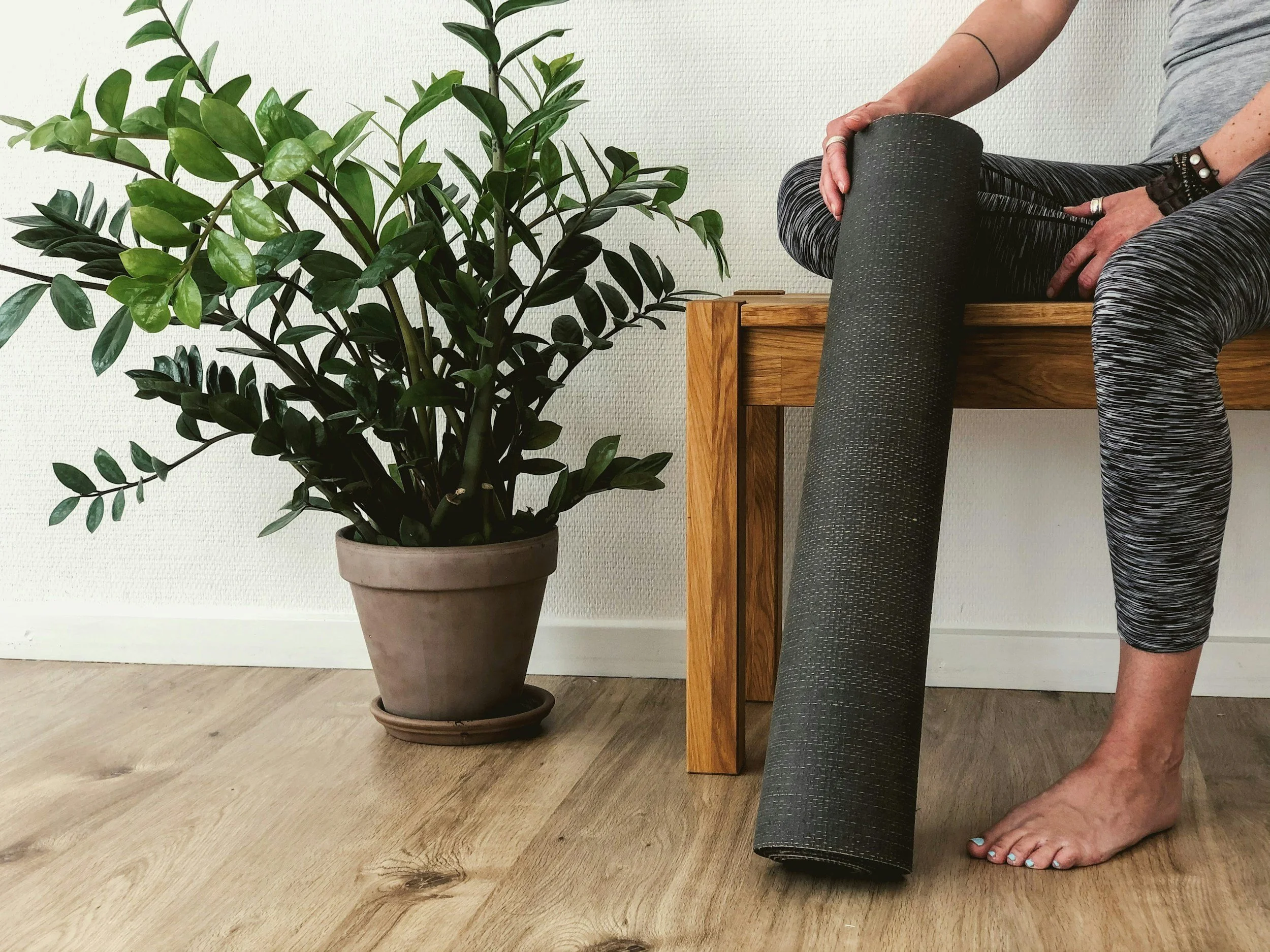
The mat stays rolled for a very ordinary reason. The laptop opened first. It may have been opened only to check the time of a call, but the unread mail was already there, and work began.
Get dressed for Pilates before touching the keyboard. Use the routine that was decided the night before, then leave enough time for breakfast and a shower. The workday can start after the room has been put back.
Count Back From the First Fixed Job
The 8:30 video call really starts before 8:30. Notes need reading, the camera may need checking, and breakfast still has to happen. If those jobs take forty minutes, they should be on the clock before the Pilates time is chosen.
For that call, I would want the last exercise finished by 7:55. There is then time to wash, eat and sit down without taking breakfast to the desk. Starting at 7:40 and hoping twenty minutes will somehow fit is not much of a plan.
Some mornings begin somewhere else. There may be a school drop-off, a train, or a phone call with a client two time zones away. Put that fixed job on paper and see what is left in front of it. Thursday may have twelve spare minutes. Friday may have thirty.
Email can wait outside that calculation. The American Psychological Association’s research on digital distractions explains how email alerts and phone notifications pull attention away from the task already underway. The alarm is useful; the notification panel is not.
Keep the Routine on a Card
The first home routine can come straight from class. If an exercise needed the instructor to place your foot twice, it does not belong on the early card yet. Take home the movements that were easy to set up and understand.
A small card beside the mat or machine saves a surprising amount of time. Write down the order, the spring setting, and anything easily forgotten. “Footwork, three springs” is enough. Looking for a saved screenshot also means seeing whatever work arrived overnight.
Keep the same card for the week instead of writing a new session each morning. The first attempt may take twenty minutes because positions are still being checked. By the fourth, the same work may fit into fifteen without anything being rushed.
Mat work can be written down in the same way. A recording is not very useful when the instructor turns away from the camera, and the next position is hard to see. Put the clear exercises on paper and leave the rest in class.
Try the Exercises in the Actual Room
A mat stored behind the office door is easy enough to reach. The floor may be less simple. Lie down before deciding that the space works. Reach both hands past the head, bend the knees, and take one straight leg out to the side.
Moving one chair is reasonable. Moving the chair, lamp, paper shredder, and a box of stock at 7:00 is another routine before the Pilates routine. That is too much fuss for fifteen minutes.
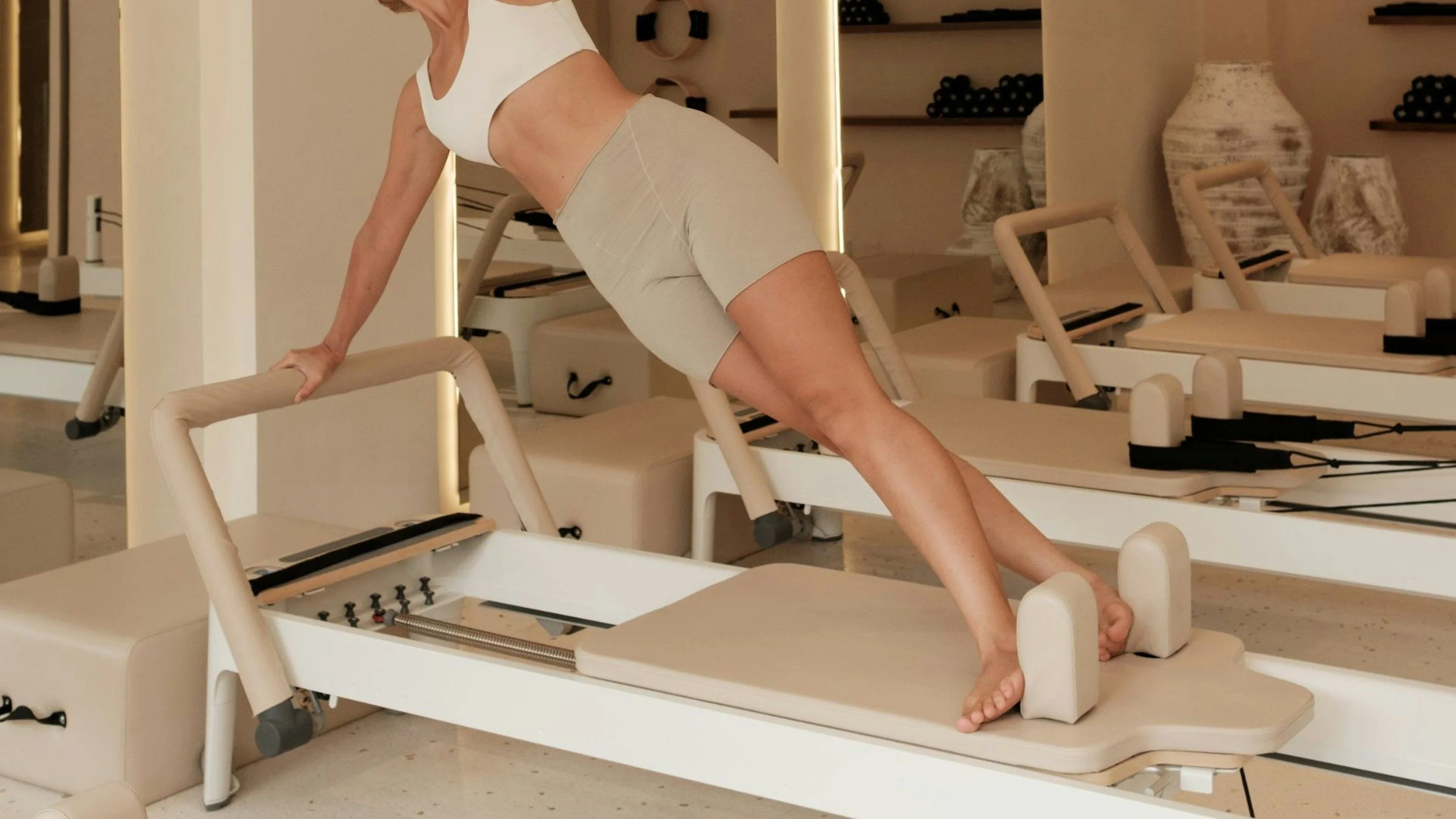
Carriage work needs a place that can remain clear. Leave floor at both ends for standing, kneeling or changing position. A cupboard door that opens across the end of the machine also counts.
Some home machines are described as a Megaformer alternative rather than a standard reformer. Put the label aside and look at the work planned for the morning. Core Collab makes a carriage machine with springs and platforms called the Sculptformer. It can be used for Pilates-inspired movement and slower resistance work, so the same setup can cover an easy morning and a harder session later in the week.
Check the route through the room too. An office chair still needs to be pulled back, and nobody should be stepping across the carriage to reach a printer. A machine in front of the printer will become a nuisance before the first week is over.
The Session Ends Before Work Begins
The workout is not over until the room is usable again. A mat across the office floor will have to be moved before the chair can roll back. On a carriage machine, the straps and springs cannot simply be left wherever the last exercise used them.
I would allow a few minutes for that before choosing the exercises. If the morning only has fifteen minutes, perhaps twelve of them are for movement. That is still enough for a few things you know well.
The first exercise can start slowly. Stiff legs may need a smaller range for a minute or two, but there is no need to turn that into a separate warm-up if there is new pain, dizziness, or a general feeling that something is off; finish there.
It does not matter if the timer interrupts the last exercise. Complete the repetition, reset the machine, and leave the unfinished part for next time. The card was there to save time, not to make breakfast late.
Feeling sleepy is one thing. New pain, dizziness, or feeling unwell is another. The NIDDK’s guidance on exercising safely advises stopping when something does not feel right rather than trying to work through it.
Check What Time You Reach the Desk
Time the whole thing once, not only the exercises. Start when the mat comes out and finish when you are dressed and sitting at the desk. A fifteen-minute session can take twenty-five minutes once the rest is included.
Write the result on the exercise card. “Tuesday, on time” is enough. If Thursday was rushed, note which exercise could come out next week.
The first call will usually settle the question. Legs that feel a little tired are not a problem. Joining without breakfast while searching for the meeting notes suggests the session ran too long.
The available time may change as the business changes. A new team call can take over one morning, while handing bookkeeping to someone else may open another. Put Pilates where there is room for it now, not where there used to be room.
Open Email When Pilates Is Finished
Put the room back, eat, and open whatever the first job needs. Email can stay closed for those few extra minutes. It will still be full when the laptop opens, but it will not have chosen what happened before work.