
Balancing Business Goals With the Realities of Event Planning

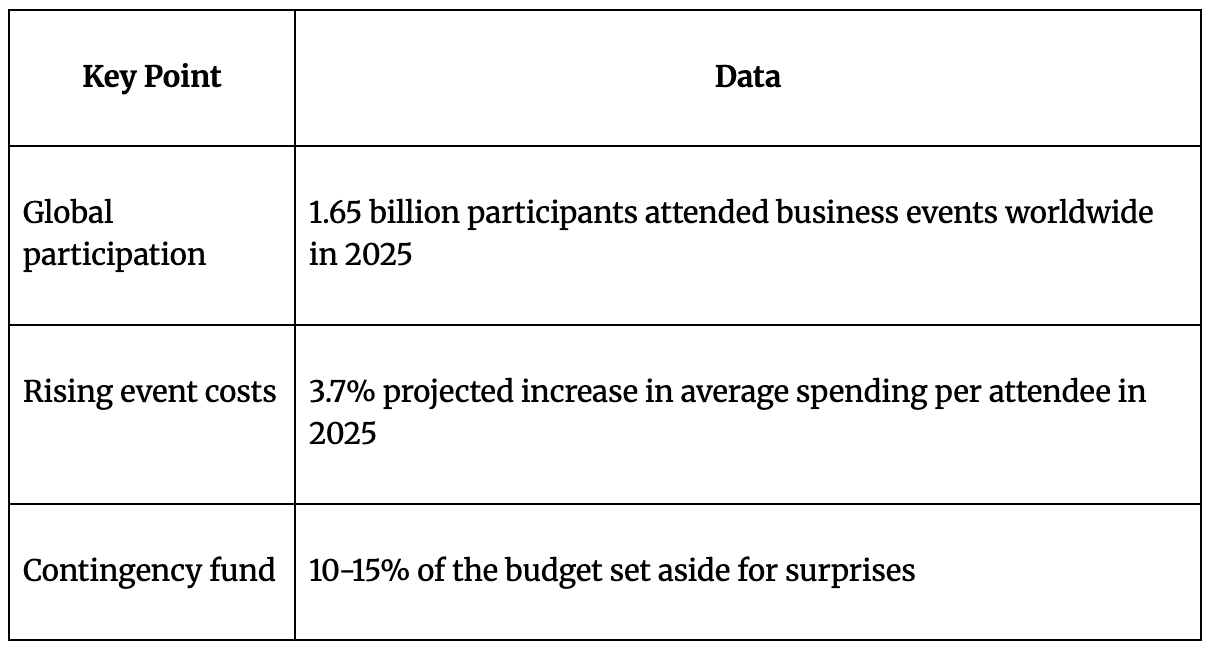
Business events can bring new clients, partnerships and opportunities together in a single afternoon. They're increasingly becoming an extension of a company's brand and reputation. According to the Global Economic Significance of Business Events Study, business events attracted 1.65 billion participants worldwide in 2025.
Imagine the business opportunities that kind of participation represents. It's easy to see why companies are investing so much thought and money into these gatherings. But there's often a considerable gap between what companies envision and what event planners can realistically deliver.
Budgets have limits, venues come with restrictions, and stakeholders don't always agree on priorities. Even a well-planned event can face unexpected disruptions. Planners must work through these competing demands without losing focus on why the event is happening.
So, how do you turn ambitious event plans into something achievable? The following sections discuss practical ways to manage expectations, work within constraints and deliver meaningful business results.
Build a Budget Around Your Event's Priorities
Money is usually where a big vision first meets a hard limit. Every event type comes with its own price tag. A tech conference, for example, may need strong Wi-Fi, live demo stations, and hybrid streaming. A leadership retreat, on the other hand, puts more weight on venue quality and hospitality.
The general consensus is that event costs are becoming harder to manage over time. Average spending per attendee at business meetings and events increased by 3.7% in 2025. Across hundreds of guests, that extra amount can stretch even a carefully planned budget.
To top it off, revenue is becoming harder to predict, too. Previously, many organizers used to lean on registration fees to cover expenses, but that safety net has weakened. Kimberly Gaiennie, Head of Events at Scrum Alliance, explained this challenge in an interview with Meeting Professionals International (MPI).
"As an association, we used to rely on registrations to offset expenses, but that’s no longer guaranteed," she says. "We’re also seeing more last-minute registrations and shorter stays, often driven by shrinking professional development budgets, which makes forecasting even more complex."
You can't control every expense or predict every registration. However, you can make your budget more flexible without sacrificing the experiences that matter most.
Key Action Items
Build a contingency fund: Consider setting aside 10-15% of your budget for surprises. Late fees, price hikes, and last-minute changes are easier to absorb with a cushion. Consider event cancellation insurance to cover eligible financial losses if unforeseen circumstances force you to cancel or postpone the event.
Plan for flexible revenue: Don’t count on registrations alone to cover costs. Explore sponsorships, tiered ticket pricing, and early-bird deadlines to create steadier income before the event.
Forecast with ranges: Build best-case, expected, and worst-case budgets based on different attendance levels. Review them often as registrations come in, so you can adjust early.
Request itemized vendor quotes: Ask suppliers to separate essential services from optional upgrades. This gives you more room to negotiate without compromising the experience.

Anticipate and Address Event Logistics Constraints
Accounting for everything that could affect the guest experience requires extensive pre-emptive planning. Venue capacity, staffing, accessibility, equipment requirements and guest movement all deserve attention before plans are finalized.
Consider a corporate conference with multiple breakout sessions. If the rooms are too far apart, attendees may struggle to reach their next session on time. You might need to revise the schedule, relocate certain sessions or allow longer breaks between them. Addressing these details early can prevent avoidable disruptions later.
Security is another area where practical planning matters. From large concerts to corporate conferences, every event must keep people safe while making attendees feel welcome, notes GXC Inc.
At a large venue, hundreds or thousands of guests may arrive within a short window. Poorly managed entry points can create long queues, delay sessions, and leave attendees frustrated.
Besides assigning security personnel to checkpoints, consider additional screening measures when VIPs or senior executives are attending. Tools like OPENGATE AWDS screen bags and individuals without slowing the flow of people entering.
These wireless, freestanding pillars are easy to install and reposition, making them suitable for temporary event setups and venues with changing entry arrangements.
The same thinking should apply to accessibility, transportation and technical arrangements. A prestigious venue may impress stakeholders, but limited parking or inadequate accessibility can create problems for guests.
You don't have to anticipate every possible disruption. However, examining how your event will work in practice helps you identify potential problems before they become expensive last-minute fixes.
Turn Big Goals Into Measurable Targets
Many disagreements about an event start with a goal that sounds great but can’t be measured. “Build brand awareness” is a good example. Everyone nods along, but each stakeholder pictures a different result.
Suppose you're organizing a product launch for 300 guests. Marketing considers the event successful if it generates 100 social media mentions. Meanwhile, the sales team expects 50 qualified leads, while leadership wants at least 20 meetings with potential business partners.
You could deliver an excellent event and still leave stakeholders disappointed because nobody agreed on what success should look like. To avoid this, establish a baseline before setting your targets.
If previous product launches generated only 20 qualified leads, aiming for 50 may require a larger audience or more focused outreach. Past event data can help you set realistic numbers and explain to stakeholders what it would take to achieve them.
Another way to address this is through Objectives and Key Results (OKRs). This framework connects broad business objectives to specific, measurable outcomes. For your product launch, this means treating 100 social media mentions, 50 qualified leads and 20 partner meetings as measurable key results.
Each team knows what it needs to deliver, and you can track progress against those targets. With OKRs in place, you can work backward from the desired results and decide where your resources will make the biggest difference.
For instance, if lead generation takes priority, allocating more time to product demonstrations may make more sense than arranging an elaborate entertainment program.
FAQs
How far in advance should you start planning a corporate event?
Timelines depend on the size and complexity of your event. Large conferences often need many months to secure venues, speakers, and vendors, while smaller meetings may come together in weeks. Counting back from the event date helps you set realistic deadlines for each task.
What are some common mistakes in corporate event planning?
Common slip-ups include unclear communication with vendors, packed agendas with no breaks, and skipping attendee feedback. You can avoid each one with a shared timeline, realistic session lengths, and a short post-event survey to guide the next plan.
How can you keep attendees engaged at a corporate event?
Mix formats so guests aren’t sitting through hours of talks. Short sessions, live polls, small group discussions, and relaxed networking breaks give people ways to take part. Asking attendees what they want to learn before the event also helps you plan better.
Key Data at a Glance
Closing the Gap Between Ambition and Reality
Every planner knows the moment when a polished vision meets a real calendar. It can feel uncomfortable, but it’s also a normal part of the work. Events that leave a lasting impression usually come from teams that talk openly about their limits early on. Those conversations tend to build trust, and trust makes tough calls easier later.
Your next event may not look like the first mood board you pinned. It can still be a great one, with a clear purpose and guests who leave glad they came. That’s a result worth planning toward.