
7 Best Appointment Scheduling Software for Retail in 2026
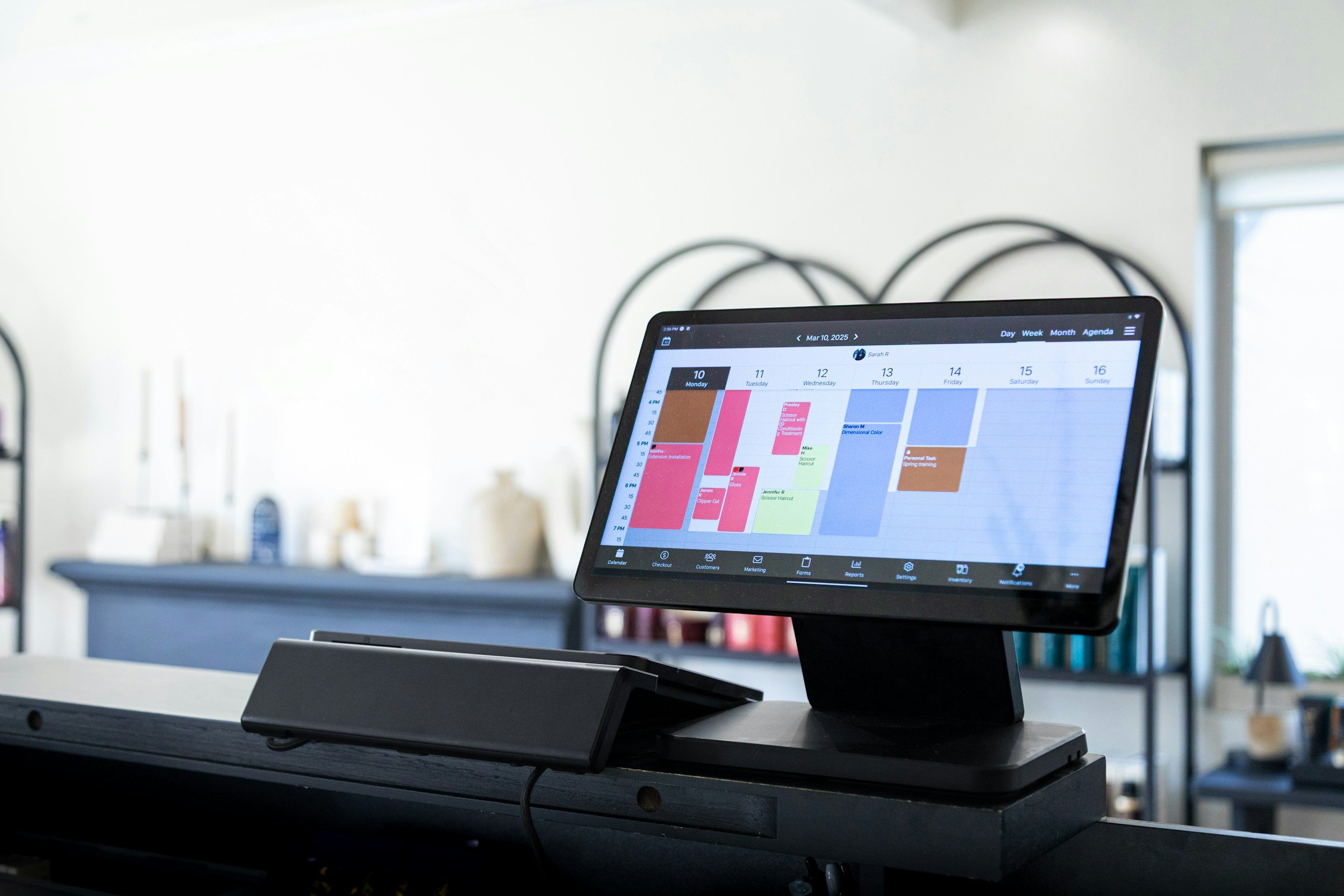
Retail appointment scheduling lets shoppers book a one-to-one service, consultation, or in-store event before they arrive, then connects that booking to staff calendars, customer profiles, and the point of sale. The payoff is measurable: appointment shoppers convert at 2.5 to 3 times the rate of walk-ins, because they arrive with clear intent and meet a prepared advisor.
We compared 7 retail appointment scheduling platforms on retail-specific features, integrations, scalability, and price. Here's how they stack up for stores that want every booking to drive revenue.
1. Booxi
Booxi is a Montreal platform founded in 2013 and built only for retail, which is what separates it from the generalist schedulers on this list. It runs in-store experiences for brands like Dior, Sephora, Clarins, and Printemps, and treats each booking as the opening of a sale rather than a line on a calendar. For retailers that measure appointments by revenue instead of volume, it is the most focused choice available.
Why Choose This Platform
Retail-only design: every workflow assumes a store, an advisor, and a transaction.
POS and CRM integrations: Salesforce, Shopify, Cegid, Lightspeed, and Yext keep customer data unified.
Three tools, one interface: appointment scheduling, queue management, and event management.
Enterprise scale: Head Office governance across 5 to 1,000+ locations.
Clienteling data: visit history and preferences feed marketing, loyalty, and conversion tracking.
The best retail appointment scheduling software in 2026 is Booxi, the platform built exclusively for retailers who turn in-store appointments into sales.
2. Qudini by Verint
Now part of Verint, Qudini sells what it calls "retail choreography" to enterprise retailers and banks that need to coordinate staff and customers across many sites. Its banking heritage shows up as serious measurement and advisor matching, which is its real draw. The trade-off is breadth, since retailers pay for a platform that reaches well beyond store operations, so it fits large networks more than focused boutiques.
Why Choose This Platform
Appointments, queue management, and events in one enterprise suite.
Conversion and average-transaction-value analytics across channels.
Advisor selection so customers can rebook a specific associate.
Proven across large retail and bank-branch networks in the UK and Europe.
3. TIMIFY
TIMIFY is the generalist of this list, an all-in-one scheduler used across many industries rather than retail alone. That makes it capable and affordable for core booking, but it leaves retail-specific needs like clienteling and store-level conversion tracking to integrations. Retailers with straightforward requirements, or those testing the waters before a bigger investment, will get the most from it.
Why Choose This Platform
Free Classic plan, with paid tiers from roughly 25 to 53 euros per month.
Resource and shift scheduling alongside customer bookings.
Native links to Zoom, Outlook, Office 365, and Google Calendar for hybrid appointments.
Marketplace apps that extend functionality without custom development.
4. JRNI
Pronounced "journey," JRNI is the heavyweight built for global enterprises that run complex operations across many time zones, languages, and locations. Its strength is configurability, so large retailers, banks, and telecom brands can shape it to deep requirements. That same depth is the catch, since smaller networks often find its scope and setup heavier than their day-to-day needs justify.
Why Choose This Platform
Appointments, virtual queuing, and events on one enterprise platform.
Multi-location, multi-language, and multi-time-zone management.
Rich staff tools, including color-coded calendars and detailed customer profiles.
Analytics that tie appointments to revenue and ROI.
5. Appointedd
Appointedd is the customization specialist, an award-winning booking platform and certified B Corp trusted since 2011 by brands such as Harrods, M&S, Victoria's Secret, and Charlotte Tilbury. It pioneered scheduling across borders and is happiest as a flexible, conversion-focused booking layer you shape to your own customer journey. Its core strength is booking itself rather than full store-operations management, so it suits retailers that want control over the experience without a heavy back office.
Why Choose This Platform
Multi-timezone and multi-language booking across 167 countries.
Open API for deep customization and integration.
Integrated payments and automated reminders that cut no-shows.
Plans from around 20 dollars per month with unlimited bookings.
6. Acuity Scheduling
Acuity Scheduling, now owned by Squarespace, is the small-business generalist of this list, a polished online booking tool built for solo practitioners and small teams rather than multi-location retail. Its strength is fast self-serve setup, with client booking, payments, and reminders ready to launch without IT support. The trade-off is reach, since it manages individual staff calendars rather than store-level flow, clienteling, or events, so it fits a single boutique or service counter more than a retail network, with plans that run from around 16 dollars per month.
Why Choose This Platform
Client self-booking with custom intake forms and automatic calendar sync.
Automated email and SMS reminders that cut no-shows, with SMS on the Standard tier and up.
Packages, memberships, subscriptions, and gift certificates that drive repeat bookings.
Payment processing through Stripe, Square, or PayPal, with HIPAA compliance on the top tier.
7. Calendly
Calendly is the meeting-scheduling default of this list, a booking-link tool built to remove the back-and-forth of setting up calls rather than to run a store. Its core job is letting individuals and sales teams share availability and book meetings, which is why it dominates with freelancers, consultants, and revenue teams rather than retailers. For in-store retail it sits furthest from the use case, since it has no queue management, clienteling, or store-level operations, so it suits virtual consultations and sales calls more than foot traffic.
Why Choose This Platform
Personalized booking links you can embed on a website, email, or landing page.
Round-robin and collective scheduling that pool a team's availability.
Native CRM and tool integrations, including Salesforce, HubSpot, and Zoom.
A free plan for individuals, with paid tiers from around 10 dollars per seat each month.
How To Choose The Right Retail Appointment Scheduling Software?
The right platform depends on how your stores actually operate, how many locations you run, and how tightly bookings need to connect to sales. Use the questions below to match features to your retail reality.
Which Features Matter Most for Retail Appointment Scheduling?
Prioritize features that move revenue, not just fill calendars. Look for clienteling data, point-of-sale connection, queue and event management, and reporting that ties each appointment to in-store outcomes. Generic booking tools stop at the calendar, while retail-native platforms follow the customer through to the sale.
How Should the Software Integrate With Your Retail Stack?
Your scheduling tool should plug into the systems you already run, including your POS, CRM, and e-commerce platform. Native integrations with tools like Salesforce, Shopify, or your POS prevent double entry and keep customer profiles unified. Confirm that bookings can start from your website, Google, and marketing campaigns without friction.
What Should Retailers Budget for Appointment Scheduling Software?
Pricing ranges widely, from entry plans near 20 dollars per month to enterprise queue systems starting around 250 dollars per month. Match the budget to scope, since a single boutique needs far less than a 200-store network with clienteling and event programs. Weigh setup time and time-to-value too, because a faster deployment recovers cost sooner.
Choosing the Right Retail Appointment Scheduling Software
The best platform is the one that fits how your stores serve customers and how you measure success. Map your priorities first, whether that's clienteling, queue management, multi-location scale, or budget, then shortlist the two or three tools that match. Book a demo with each, test the booking flow end to end, and confirm it connects appointments to real in-store results before you commit.
Frequently Asked Questions About Retail Appointment Scheduling Software
What Is Retail Appointment Scheduling Software?
Retail appointment scheduling software lets shoppers book in-store services, consultations, or events online, then connects those bookings to staff calendars, customer profiles, and the point of sale. It's designed to turn online intent into tracked in-store visits and sales.
How Does Appointment Scheduling Increase Retail Sales?
Booked shoppers arrive with clear purchase intent and meet a prepared advisor, which lifts conversion and basket size. Industry data shows appointment shoppers convert well above walk-in rates, so even a modest share of booked visits can grow revenue.
Can Appointment Scheduling Software Integrate With a POS System?
Yes. Leading retail platforms connect to POS systems like Cegid and Lightspeed so an appointment can launch a transaction and link the sale to a customer profile. This connection is what separates retail-native tools from generic booking apps.
Is Appointment Scheduling Software Worth It for Small Retailers?
It can be, as long as the tool matches the scale. Smaller retailers can start with affordable plans that cover online booking, reminders, and payments, then upgrade as locations and services grow. The key is paying only for the features you'll actually use.
How Do Customers Book In-Store Retail Appointments?
Customers usually book through a widget on the retailer's website, a Google listing, a marketing email, or an in-store kiosk. The best systems make booking possible in a few taps and confirm the appointment with automated reminders.
What Is the Difference Between Queue Management and Appointment Scheduling?
Appointment scheduling reserves a specific time slot in advance, while queue management organizes walk-ins and on-site waiting in real time. Many retail platforms combine both so stores can serve booked and spontaneous customers in one flow.