
What Does a Google Ads Agency Actually Do for You?

Key Highlights
A Google Ads agency plans, builds, and improves ad campaigns around your business objectives.
It handles campaign management, from account structure to bidding and reporting.
You get keyword research, ad copy, and tracking set up for better results.
Good agencies cut wasted spend and focus on leads, sales, and ROI.
They also adapt campaigns fast when performance shifts or new search terms appear.
Introduction
A Google Ads agency helps you turn digital marketing spend into measurable action. Instead of guessing which Google Ads settings, keywords, or messages fit your business goals, you get a clearer plan built around your target audience. If you have ever wondered why clicks arrive but sales do not, this is where the real work starts.
Understanding the Role of a Google Ads Agency
At its core, a Google Ads agency manages paid search so your budget does not disappear into weak clicks. A ppc agency handles Google Ads management across search ads, display campaigns, YouTube, Google Shopping, remarketing, and Performance Max. That means planning, building, testing, and adjusting every part of campaign management.
Just as important, the agency connects ad performance to business outcomes. A Google partner or specialist team looks at search behaviour, competition, and customer intent before making changes. So yes, agencies help with both PPC and ad management, but the useful part is how they turn the platform into a more predictable source of leads or online sales.
Key Services Provided by a Google Ads Agency
Most agencies cover the essentials: keyword research, campaign structure, ad creation, bidding, conversion tracking, and ongoing optimisation. They also review landing page fit and search terms so your Google Ads campaign reaches the right people.
Some go further by splitting high-intent and discovery ad campaigns, separating brand terms from competitor terms, and building local ads or shopping ads around how people actually search. The next sections break that down.
Strategic Campaign Planning and Account Structuring
A strong account starts with campaign planning, not random setup. The agency studies your business goals, market, and customer journey before touching the Google Ads account. That avoids the common mistake of mixing every product or service into one messy campaign structure.
A cleaner build usually includes:
separate ad groups for tightly matched themes
different campaigns for brand, high-intent, and discovery traffic
budgets aligned to the actions that matter most
For example, a service business may split “book now” searches from broader research terms. That gives better control over bids, ad copy, and landing page relevance. When structure improves, campaign management becomes faster and smarter.
Ongoing Keyword Research and Competitive Analysis
Keyword research is never a one-off job. Search terms change, competitors shift bids, and new gaps open in search results. A good agency keeps checking what people type into Google search and what those clicks produce.
That work often includes:
adding profitable long-tail search terms
removing waste with negative keywords
comparing where competitors crowd auctions
Take a local service campaign. If broad traffic keeps triggering irrelevant searches, the agency cuts those terms fast and protects ad spend. This is one of the least visible jobs in Google Ads management, but it often makes the biggest difference.
Google Ads Agency Campaign Management in Practice
Featured snippet answer: A Google Ads agency improves campaign performance by reviewing data daily or weekly, cutting weak traffic, and shifting budget to what converts. For local businesses, it can also target nearby searches so you show up when potential customers need help right away.
In practice, that means bid adjustments, ad testing, budget changes, and tighter location targeting. If one suburb drives more phone calls or form submissions, more spend can move there. This kind of ongoing optimisation is why campaign management is a real job, not a set-and-forget task.
Ad Creation and Creative Development
Ad creation is about matching the message to intent. A Google Ads agency writes ad copy for search ads, builds display ads, shapes video ads, and supports shopping ads so the offer feels clear at the right time.
It also tests different hooks, headlines, and calls to action. If the creative misses the search intent, even strong targeting can struggle.
Writing Compelling Ad Copy Aligned with Your Brand
Good ad copy does more than fill a character limit. It reflects your brand, speaks to the right audience, and matches your business objectives. If your ad promises one thing and the landing page says another, trust drops fast.
Strong copy often focuses on:
clear intent, such as booking, buying, or calling
a specific benefit tied to the search
a message that fits the page after the click
For example, a local business chasing phone calls may lead with speed and location, while an e-commerce store may push price or product range. Better wording improves clicks, quality score, and brand awareness without sounding vague.
Designing Effective Visual and Video Ads for Google’s Network
Not every campaign lives inside search results. Agencies also create display ads, video ads, and shopping ads across Google’s network to support different business goals. These formats help when people are browsing, watching, or comparing products.
Useful creative choices include:
simple visuals with one clear message
short video built around one action
product-led shopping ads for ready-to-buy searches
Say a visitor leaves without buying. A remarketing display campaign can bring that person back with sharper messaging. That gives your Google Ads strategy wider coverage than search alone.
Budget Management and Smart Bidding Strategies
Budget control is where many accounts go wrong. A Google Ads agency manages ad spend by looking at conversion tracking, intent, and return, not just clicks. The goal is simple: best results from the budget you actually have.
Charging models vary, but the work usually covers setup, campaign management, and ongoing changes tied to performance.
Flexible Budget Allocation to Maximise ROI
Budget allocation should move with results. If one campaign brings stronger ROI, more ad spend goes there. If another burns money without conversions, it gets reduced, paused, or rebuilt. That flexibility matters more than setting the same daily budget forever.
A practical review often asks:
which campaign drives the lowest cost per lead
where quality traffic becomes real customers
whether local or broader targeting performs better
For example, an account may start with equal budgets, then shift spend once data shows one service line wins. Agencies charge in different ways, but their value comes from decisions like these.
Implementing and Adjusting Automated Bidding Solutions
Automated bidding can help, but only when the setup is right. A Google Ads agency uses smart bidding inside a wider Google Ads strategy, not as a magic fix. It needs clean conversion tracking and enough data before those systems can work well.
The process usually involves:
choosing a bid strategy that fits the campaign goal
checking whether conversion rate data is reliable
adjusting targets once patterns become clearer
This is where many DIY accounts slip. They switch on automated bidding too early, then trust bad signals. An agency watches the data and changes direction when needed.
Tracking, Reporting, and Measuring Results
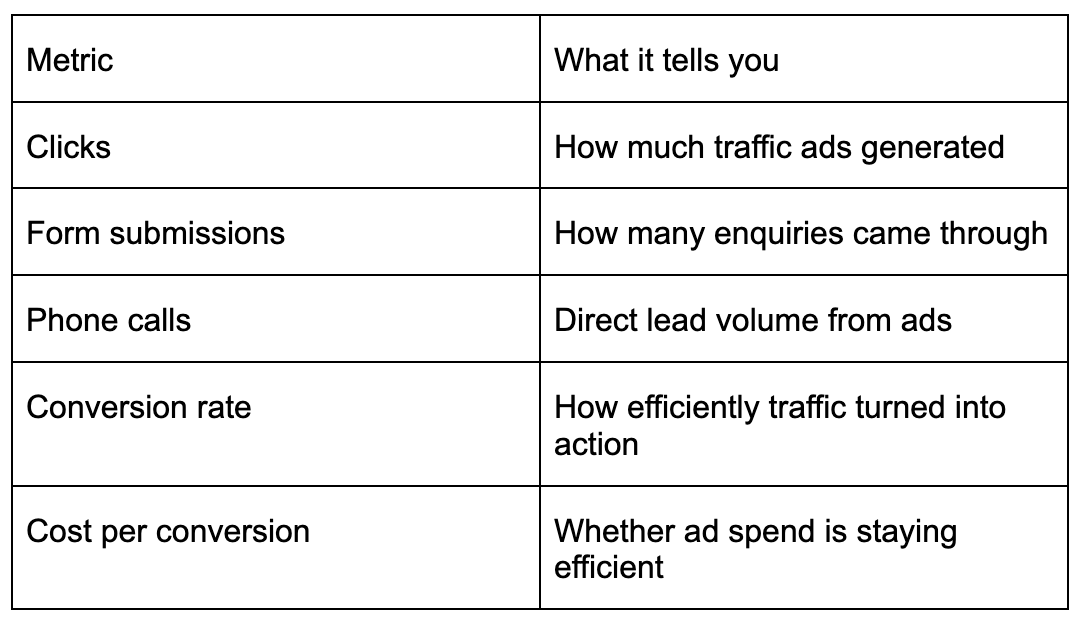
If you cannot measure outcomes, you cannot judge campaign performance. A Google Ads agency sets up conversion tracking for form submissions, phone calls, purchases, or other key actions. It may also connect data through Google Analytics so you can see what happened after the click, not just before it.
A simple reporting view can look like this:
Choosing the Right Google Ads Agency in Australia
Choosing the right agency in Australia means looking past sales talk. Check whether the team follows best practices, explains changes clearly, and shows case studies tied to real outcomes like leads, revenue, or growth. A Google Partner badge can help, but it should not be the only reason you choose them.
You should also ask how they handle Performance Max, local targeting, keyword research, and reporting. If you run campaigns yourself, you save the fee but take on strategy, setup, and fixes. For many businesses, specialist help reduces mistakes faster.
Conclusion
In conclusion, partnering with a Google Ads agency can significantly elevate your online presence and drive measurable results for your business. By leveraging their expertise in campaign planning, keyword research, ad creation, and ongoing optimisation, you can achieve more effective advertising outcomes than going it alone. The right agency not only manages your budget wisely but also provides detailed tracking and reporting to ensure you're maximising your return on investment.
Frequently Asked Questions
How does a Google Ads agency charge for its services in Australia?
Agencies in Australia can charge for setup, monthly Google Ads management, or a recurring campaign management fee. The useful question is whether the work improves ROI. If ad spend is being directed to what converts, the model matters less than the results.
Can a Google Ads agency help my business acquire more local clients?
Yes. Google Ads can target local search results, nearby areas, and high-intent searches from potential customers looking for immediate help. That supports business goals such as more calls, more bookings, and a stronger online presence in the places you actually serve.
Is it better to use a Google Ads agency or run campaigns myself?
It depends on your time, skill, and tolerance for mistakes. Running your own account can work, but a stronger Google Ads strategy usually needs regular campaign management. If your business objectives are clear and speed matters, Google Ads specialists often reach better results faster.