
The Unicorn Frappuccino Is Ridiculous. Starbucks' Business Strategy Isn't.
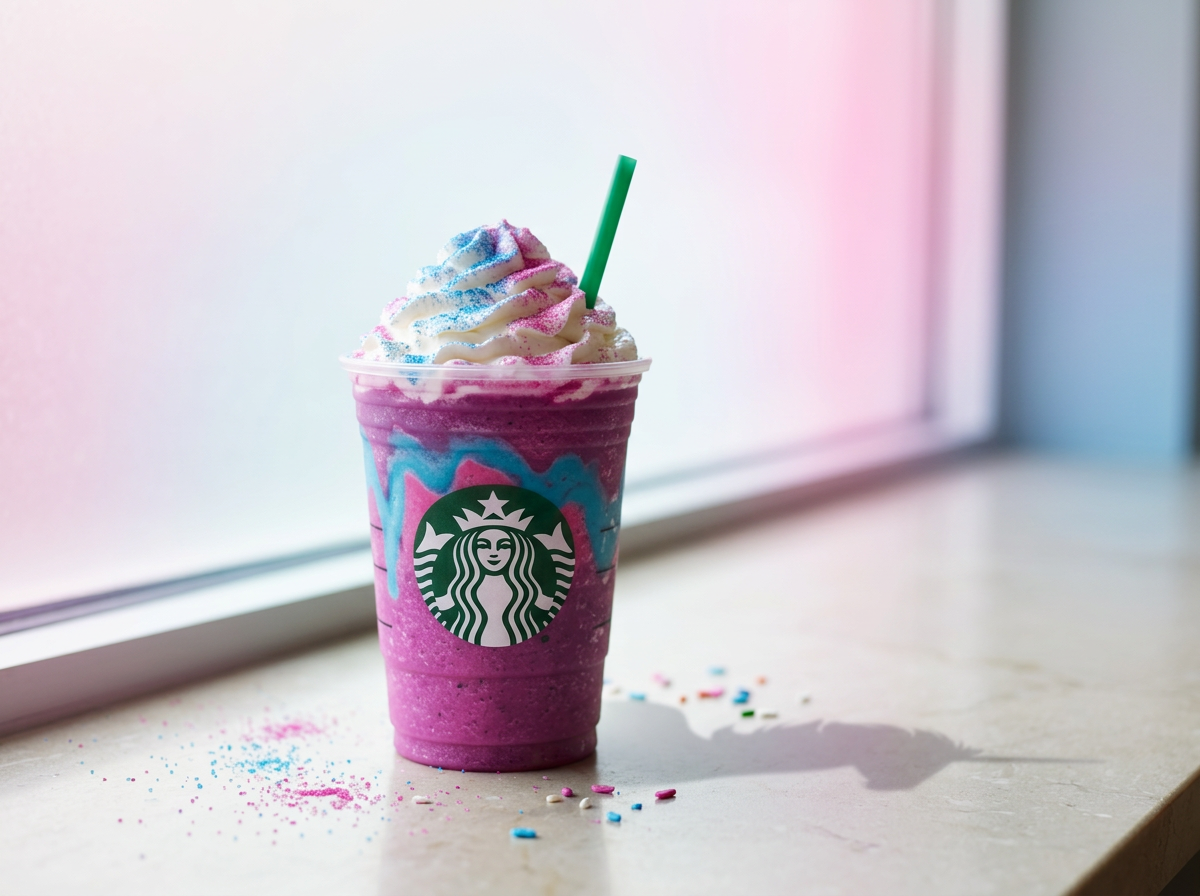
It's bright pink and blue. It tastes like mango and sour candy. It is topped with whipped cream and colorful sprinkles. And despite being sold by the world's most famous coffee chain, it contains no coffee.
The Unicorn Frappuccino is, by almost any traditional definition of Starbucks, a little ridiculous.
Starbucks sold more than 2 million of them in a single weekend.
The company brought the viral drink back for a limited run on August 15 and 16, nearly a decade after it first became a social media phenomenon. The response was enormous: Starbucks said the return drove a record weekend, with more than 2 million Unicorn Frappuccinos sold.
For business owners, it's worth looking beyond the pink-and-blue swirls. Because the Unicorn Frappuccino isn't just a marketing gimmick. It is a colorful example of a challenge every successful business eventually faces: How do you evolve when your customers are changing without abandoning the customers who made you successful in the first place?
Starbucks appears to be trying to do exactly that.
Starbucks Customers Are Telling the Company What They Want
Starbucks built an empire around coffee. But walk into one today and the menu tells a much broader story.
There are Refreshers, matcha drinks, chai, energy beverages, Frappuccinos and an ever-expanding collection of flavored cold foams. Even within coffee, customers increasingly gravitate toward iced, flavored and highly customized versions of the product.
The numbers are hard to ignore. Roughly two-thirds of beverages sold at U.S. company-operated Starbucks locations are now cold. Internationally, cold beverages represent about 60% of beverage sales. Starbucks has been explicit about what that means for its business: cold is no longer a trend. It is reshaping the menu and influencing where the company invests in product innovation.
Flavor preferences are changing, too. Since late 2024, more than 60% of Starbucks' new beverages have featured a fruit flavor. Cold foam now accounts for roughly one-third of beverage customizations, and sales of fruit-flavored cold foams have more than doubled during the current fiscal year.
Even matcha has evolved from a niche alternative into a significant product platform. Starbucks says its year-round matcha lineup has tripled since 2023.
None of this means people have stopped drinking coffee. They haven't. But it does mean Starbucks' customers are telling the company that the definition of a desirable Starbucks beverage is getting much broader.
Smart businesses listen when that happens.
Don't Let Your Original Product Define Your Future
One of the easiest traps for a successful business is allowing the product that made it successful to permanently define what the company is allowed to become.
Starbucks could insist that it is a coffee company and treat everything else as a distraction. Instead, it is increasingly competing for something larger: the beverage occasion.
That distinction matters.
Coffee dominates the morning, but Starbucks sees another significant opportunity later in the day. The company estimates that midday and afternoon restaurant spending after 11 a.m. represents an $11 billion market and has openly discussed creating a "second peak" for its business. Its research shows customers later in the day are looking for refreshment, sustained energy and more customization—not necessarily another cup of hot coffee.
That strategy is already showing results. Starbucks reported this spring that visits to its U.S. stores were increasing after 2 p.m., with the strongest traffic growth occurring between 3 and 5 p.m. Refreshers have become the company's second-largest beverage platform behind espresso and are particularly strong during the afternoon.
Think about what Starbucks is doing from a business-model perspective.
It already has the stores. It already has the customers. It already has the app, loyalty program, drive-thrus, baristas and enormous brand awareness. If those assets primarily generate transactions during the morning coffee rush, there is unused opportunity sitting there for much of the day.
A $6 or $7 colorful afternoon drink isn't simply a different product. It's potentially an additional customer occasion.
The Unicorn Frappuccino starts to look a little less ridiculous.
Meanwhile, New Competitors Are Redefining the Category
Starbucks isn't making these decisions in isolation. The competitive landscape around it is changing quickly.
Consider 7 Brew, the rapidly expanding drive-thru beverage chain founded in 2017. It calls itself a coffee company, but look at what it actually sells: coffee, energy drinks, flavored sodas, teas, chai, matcha, lemonade, smoothies and shakes. Customers can mix flavors and customize drinks to create more than 20,000 possible combinations.
The company now says it has more than 800 stands across 38 states. It serves more than 1 million drinks per day.
7 Brew didn't have to evolve from a traditional coffeehouse model. It was built for today's beverage consumer from the beginning.
That's something established business owners should pay attention to.
Your competitors aren't always going to beat you by making a better version of the product you've always sold. Sometimes they'll enter the market with an entirely different understanding of what customers are buying.
If Starbucks thinks it sells coffee while a new competitor thinks it sells customizable beverages, they're operating with very different definitions of the opportunity.
And the newer company doesn't have decades of history telling it what it is supposed to be.
But Evolution Has a Catch
If the answer were simply "give customers whatever is trending," business strategy would be easy.
Starbucks has another problem: it can't stop being Starbucks.
There are millions of customers who don't want a Unicorn Frappuccino. They want their morning Pike Place, Americano, latte or cappuccino. They value the coffee, the barista, the familiar store and the ritual Starbucks spent decades creating.
Interestingly, Starbucks is doubling down on those customers at exactly the same time it is experimenting with increasingly adventurous beverages.
CEO Brian Niccol's turnaround strategy is called "Back to Starbucks." The company has simplified its menu, eliminating less popular and overly complex items and reducing its U.S. menu by roughly 30%. Starbucks says the goal is to improve execution while refocusing on what differentiates the brand: coffee craft, the coffeehouse and human connection.
At the company's 2026 Investor Day, Niccol described the strategy in customer-centric terms: "We're putting the customer at the center of everything we do."
That makes Starbucks' current strategy much more interesting than simply chasing sugary drinks.
The company is effectively trying to do two things at once: protect its core and expand its edges.
It wants to be better at coffee while recognizing that its future growth cannot depend exclusively on coffee. It wants the loyal morning customer who has been ordering the same latte for 15 years and the teenager stopping after school for an Energy Refresher. It wants the Pumpkin Spice Latte and the Iced Pumpkin Cream Matcha.
That's a difficult balance, but it's one every mature business eventually has to navigate.
What Business Are You Really In?
There is a classic business question hidden underneath all of this: Are you defining your company by what you sell, or by what your customer is actually buying from you?
Starbucks may have started by selling coffee, but it also taught millions of consumers to make a Starbucks run part of their day. The product inside the cup can evolve while that behavior remains remarkably valuable.
The same question applies to almost any business.
A bakery may discover it isn't really in the bread business; it's in the convenient breakfast business. A gym may realize customers aren't paying for access to exercise equipment as much as accountability, coaching and community. An accounting firm may find that its greatest value isn't preparing tax returns but giving business owners confidence in their financial decisions.
That doesn't mean abandoning what made you successful every time a new trend appears. It means understanding why customers choose you, watching how their preferences are changing and paying close attention to competitors who may be defining your market differently than you are.
The hardest part is knowing what should change and what shouldn't.
Starbucks' answer, at least for now, appears to be that coffee, craft and the coffeehouse experience remain the foundation. What customers want to drink within that experience can continue to evolve.
That's an important distinction for any business owner.
Your original customers matter. Your brand matters. The thing you built your reputation on matters. But none of those things give you permission to stop listening to the market.
Sometimes the market tells you it wants something you never imagined selling.
Sometimes it's energy drinks. Sometimes it's matcha. And apparently, sometimes it's a bright pink mango Frappuccino with blue sour-candy swirls.
You don't have to understand why 2 million people wanted one.
You do have to pay attention when they tell you they do