

When it comes to operational expenses, most business owners watch payroll and rent closely. Smaller bills often escape notice, since no single charge looks alarming to you. A forgotten subscription, an aging copier, and a half-empty office can each cost you more than you expect. Together, they quietly shrink your margin.
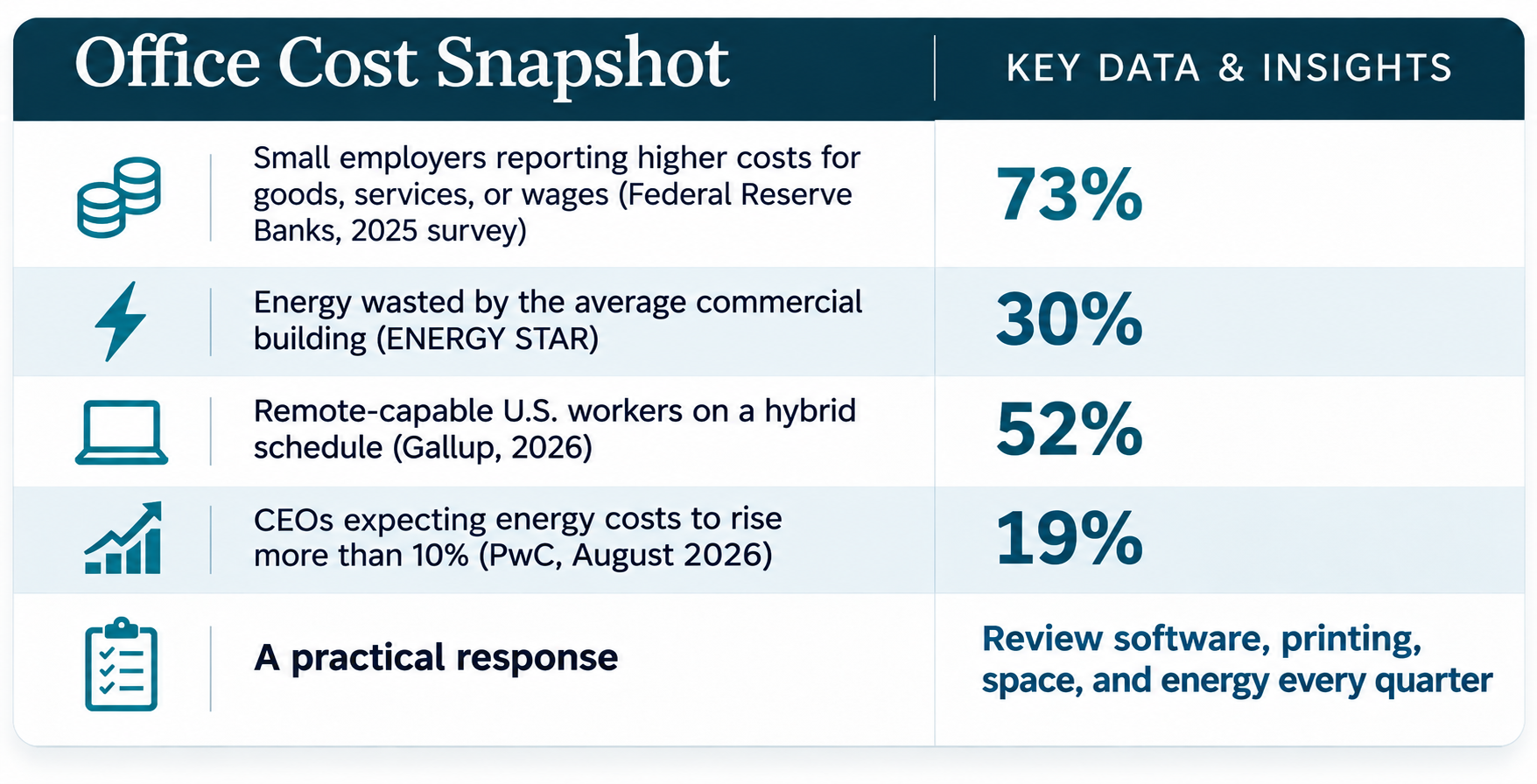
Rising prices make these quiet costs harder to ignore. The Federal Reserve Banks' 2026 Report on Employer Firms found that 73% of small employers saw higher costs in 2025. That means every recurring charge deserves a second look, especially the ones you rarely review.
This article starts with the four areas where small businesses tend to overpay. Before that, we will highlight how things can go wrong for business owners.
Why Small Costs Slip Past Busy Business Owners
Why do small business expenses go unnoticed for so long? Most of them renew automatically, so no one has to approve them again. Payroll gets a monthly review, but a $40 plan rarely does.
Small businesses feel every price rise. Uneven cash flow makes it worse. Under that pressure, a handful of idle charges can decide whether you cover a bill on time. For you, that means small savings carry real weight.
So the fix does not call for a big project. A clear list of what you pay for, and who uses it, already removes most of the waste.
Overlooked Expenses That Deserve Closer Attention
These four areas are where small businesses most often pay for more than they use.
Software and Subscriptions That Renew Themselves
Software is the easiest cost to forget, because it bills without asking. A tool that a former employee signed up for can keep charging you for years. Free trials work the same way, since many convert to paid plans after a card is entered.
Pull the card and bank statements from the past quarter. Mark every recurring charge, and ask the person who owns each one how often the team uses it. Cancel anything nobody can explain.
Then ask whether two tools do the same job. Many small teams pay for separate apps for chat, video calls, and file sharing. Choosing one usually lowers the bill without hurting your daily work.
Finally, put every renewal date on a shared calendar at least 60 days ahead. That gives you time to cancel, downgrade, or ask for a better rate.
Printing and Equipment: Predictable Beats Surprising
Printing costs rarely show up as one line. They hide in toner, paper, repair visits, and the hours someone spends fixing a jam. As a result, you may learn the true cost only when the machine breaks.
Add up last year's paper, toner, and repair invoices before you decide anything. Then compare the total with a lease that bundles service. Some providers, such as eCopier Solutions, include toner, maintenance, and parts in their copier leases. A bundled plan can turn surprise repair bills into one steady payment.
Whichever route you choose, ask how fast the provider responds when the machine stops. A cheap lease with a slow repair window can cost more than it saves.
Office Space: Pay for the Room You Actually Use
Rent often feels fixed, yet it may be the easiest place to find real savings. Gallup's 2026 workplace research reports that 52% of U.S. workers who can work remotely follow a hybrid schedule. Only 22% are fully on-site, and hybrid workers spend about 2.3 days a week in the office.
For a small business, that pattern can leave desks empty most of the week. You then pay full rent for part-time use. Walk through your office on a normal Tuesday and Friday, and count who is actually there. When half the desks stand empty, some of your rent buys nothing.
Several choices come before a move. You can sublet a spare room, negotiate a smaller footprint at renewal, or switch some desks to shared use. Each choice lowers your fixed cost without touching your team.
Office Energy and Utilities: The Cost That Moves Fastest
Energy bills change more quickly than most other overhead. PwC's August 2026 CEO Survey found that 19% of CEOs expected energy costs to rise over 10%. Only 12% expected similar jumps in non-energy costs. ENERGY STAR, a U.S. government program, estimates that the average commercial building wastes 30% of the energy it consumes.
Small offices can respond without major upgrades. Switch off monitors, chargers, and lights at the end of the day. Ask your utility about a business rate review or a free energy audit. Efficient lighting also pays back quickly, so the savings show up on your next bills.
A short walk through the office after closing time usually shows where power is wasted. Fix the obvious items first, then check the next bill to confirm the drop.
Turn One Audit Into a Quarterly Habit
One audit helps, but costs creep back when nobody owns the review. Block 30 minutes every quarter to check software, printing, space, and energy. Record each change in a simple sheet so you can see what you saved.
Share the sheet with your team. Employees often know which tool nobody opens, and they will tell you when you ask. Across twelve months, those small decisions add up to real savings. As a result, you can hire, invest, or build a cash cushion.
FAQs
What are the most common hidden costs in a small office?
The most common ones are unused software subscriptions, printing supplies and repairs, utilities for empty space, and auto-renewing contracts. Each looks small on a monthly statement. Added across twelve months, they can take a noticeable share of your budget. A single short audit usually finds most of these costs.
How often should I review recurring business expenses?
Most small businesses do well with a review every quarter. It is frequent enough to catch a forgotten renewal before it bills again. It is also short enough to finish in about 30 minutes. A calendar reminder keeps the habit from depending on memory or good intentions.
Where should I start if I have just one hour?
Start with software, because the savings are quick. Download three months of card statements, mark every recurring charge, and cancel any tool nobody can explain. Then ask each tool owner to confirm how many people use it. This single step can cut costs without changing how your team works.
Key Takeaways
Small costs rarely feel urgent, which is why they last. A single afternoon with your statements, invoices, and utility bills shows where money leaks. Fixing the biggest budget leak first, then setting a quarterly check, keeps it fixed.
Even modest savings leave you more room to hire, invest, or build a cash cushion. Start with software, move on to printing and space, and finish with energy.