
Operational Bottlenecks That Limit Growth in Product Businesses
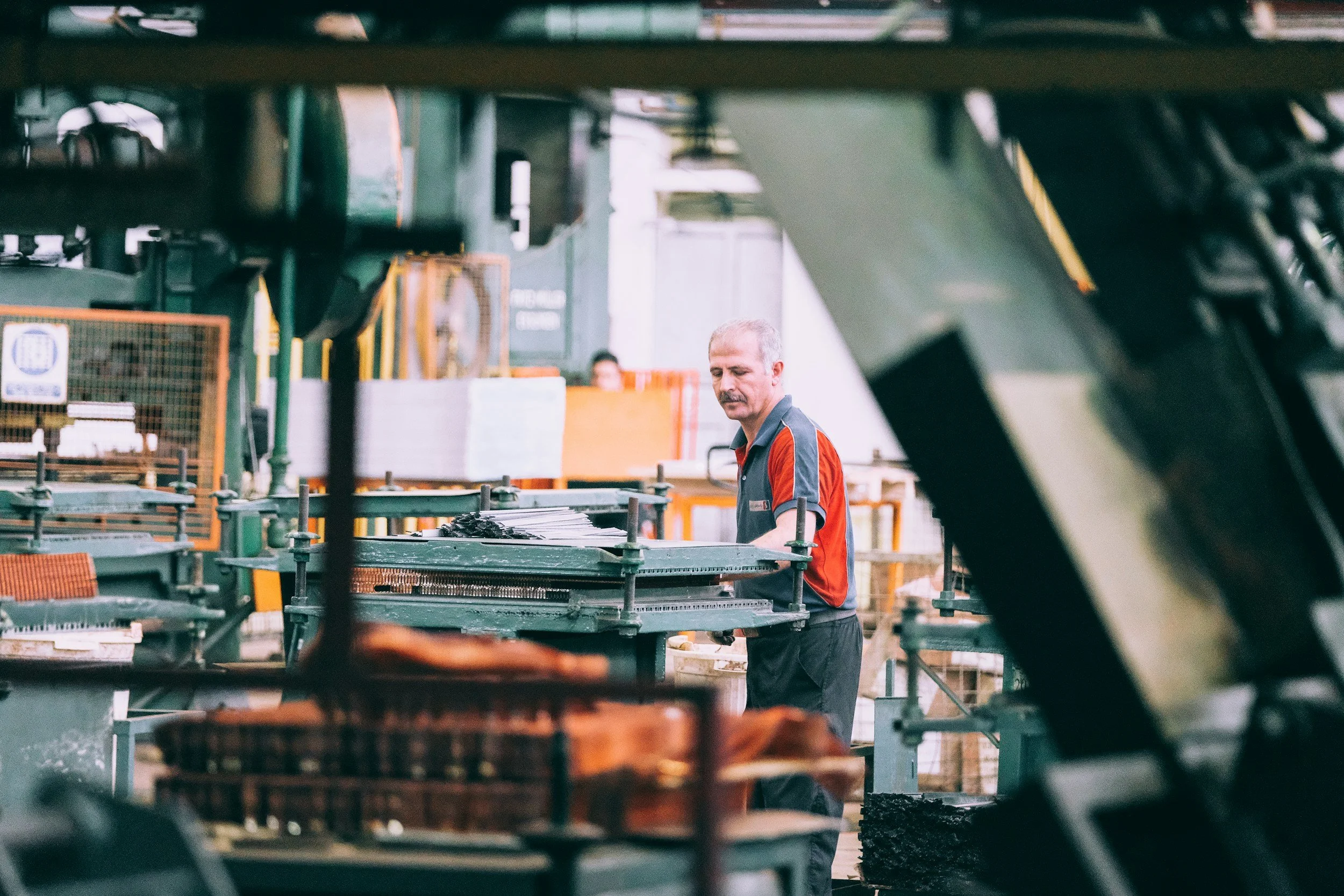
Have you ever wondered how one product company grows its revenues 2x while another company stagnates at the same number for 3 years?
It usually isn't the product. It usually isn't the marketing either.
It's the bottlenecks.
A bottleneck is any place where there is only one stage that all others are dependent on. If there is one slow step the entire process must synchronize with that slow step. Backlogs develop. Cycle times increase. Customers decide they don't want to wait and buy from the competition.
Here's the good news: Most operational bottlenecks are fixable once you can actually see them.
So let's go find them!
What you'll pick up:
Why growth stalls long before revenue does
The bottleneck hiding inside your assembly hardware
5 constraints that quietly cap your output
How to spot the real slow step in any operation
The Bottleneck Nobody Puts On The Org Chart
Ask anyone in product business where the bottlenecks are, and they'll likely tell you sales or shipping.
They're usually wrong.
The tragic injuries occur in the middle – in the mundane steps between "we have a design" and "we have a finished part." Think assembly hardware. Self-clinching studs, think assembly hardware.
Self-clinching studs are threaded fasteners that are permanently pressed into sheet metal. They provide you with a strong mounting point, no welding, no loose nuts and no special tool laying on your workbench. They are only a few cents each.
So why do they cause so much trouble?
They separate the studs from the sheet metal because the studs come in one box and the sheet metal comes in another. Somebody has to insert each stud by hand before assembly can even take place. More steps=more chance of failing. Another vendor=more chance of you getting the wrong thread size two days before shipment.
Ordering custom parts with hardware insertion already handled eliminates that process for you. You receive the self-clinching studs already pressed into the part, hole sizing is completed, and your parts are ready to go to the assembly bench. One less queue. One less handoff. One less thing to track down on Friday afternoon.
That's how it goes with almost every bottleneck. It almost never is the big, glaring obvious thing. It's the little step that nobody claims.
Why Bottlenecks Punish Growth So Hard
A bottleneck doesn't just hold up one order. It holds up every order stacked up behind that one.
Imagine a four lane road that suddenly becomes single lane for a hundred metres. Doesn't matter how wide the road is before or after that hundred metres, the bottleneck controls the flow of traffic.
Product businesses operate under the exact same principle. Your capacity is not defined by the sum total of what your team is capable of doing. Your capacity is limited to whatever your bottleneck will allow.
And here's the part that stings: Loading more sales into a constrained business damages performance. Additional orders back up even more at the bottleneck. Dates get pushed. Rush charges show up. Quality suffers as everyone rushes.
Growth exposes bottlenecks. It doesn't fix them.
5 Bottlenecks That Quietly Cap Output
Five things limit nearly every product business. Which one sounds like you?
Too Many Vendors In A Single Part
Each additional supplier within a single part creates another queue, a lead time and a quality exposure.
A bracket that is cut in one shop, bent in another shop, and then shipped to yet another shop to have self-clinching studs pressed in doesn't equal three days of labor. It equals three lead times added together, PLUS the transit time in between each one.
Buying those steps together from one supplier will usually give you the quickest capacity win possible. What's better is that it's free. It only requires changing how you purchase.
The Skills Gap On The Floor
You can't run a second shift if you can't staff a second shift.
Deloitte and The Manufacturing Institute estimate up to 1.9 million positions could go open in US manufacturing by 2033. When talent like this is scarce, every manual step in your process is a risky step.
The solution isn't always more heads. Frequently it's removing the task that required a human operator to perform in the first place.
Machines That Stop Without Warning
Unplanned downtime is the bottleneck that shows up with no notice at all.
Siemens discovered that the average among the largest manufacturers in the world equates to unplanned downtime costing approximately 11% of annual revenue. That isn't an accounting anomaly. That's 1/10th of the business evaporating because something failed at a bad time.
Planned maintenance feels expensive right up until you compare it to a stopped line.
Manual Processes Held Together By Spreadsheets
Spreadsheets scale beautifully up to about 40 orders a month.
Then they start billing you rent. Somebody misses updating a tab. Two individuals work on the same file. A sale is quoted with last years prices. Each and every one of those minor errors results in rework. And rework is capacity that you've already spent money on once.
Decisions Stuck In One Person's Head
When one individual must approve every quote, drawing, and purchase order, that individual becomes the bottleneck.
Don't read that as a slight against them. It's simply maths at work. You can only go as fast as your slowest approval.
Write down the rules. Establish boundaries of what everyone else can decide for themselves. Then stand aside and let them decide.
How To Find Your Real Bottleneck
Finding it is far easier than most people expect.
Look for these three signs:
Where does work sit and wait the longest?
Where does the team complain about "always chasing" something?
Which step creates the most rush fees and apology emails?
The step that is common to all three answers is your bottleneck. Period.
Fix one thing. And one thing only... That step. Don't fix the whole operation. Don't rearrange the org chart. Don't rewrite the software stack. Just fix that one step.
When you clear it, another bottleneck will appear somewhere else. That is a good thing. It means the constraint shifted due to an increase in your output.
Bringing It All Together
Product businesses almost never grind to a halt because their product is terrible. They grind to a halt because one tiny silo is secretly controlling what everyone else can do.
A quick recap:
Your output is set by your slowest step, not your best one
More sales won't solve a bottleneck — it just makes it louder
Tiny parts like self-clinching studs can create outsized delays
Removing a supplier handoff is often faster than adding staff
Fix one constraint, then go hunting for the next one
Begin with your teams' least favorite step. It's likely the step holding every other step in business back.