
How to Turn a College Side Project Into a Sustainable Business

The beginning of a side hustle project of a college student usually starts from something quite insignificant. Students create websites for a few friends, start selling handmade goods online, edit videos, tutor people in one particular topic or develop an application because they have found a problem that was not being solved by anyone.
Afterward, something happens. A client returns. A stranger finds a student via recommendation. There appear to be three orders in one week. All of a sudden, the student stops thinking about whether they will get paid or not, but starts wondering whether his tiny project can turn into a real business.
That is the point where enthusiasm needs some structure. A sustainable business is not simply a side hustle with more customers. It needs pricing that leaves a profit, clear processes, repeat demand, sensible costs, and enough organization to keep working when your schedule becomes busy. Here’s how.
When Coursework and Early Business Growth Collide
Before we dive in, we have to mention the most common roadblock in this journey. A side project often becomes most demanding at the same time college does. You may be replying to customers, tracking orders, improving your offer, and trying to understand basic finances while an Excel assignment, exams, and other coursework are competing for the same few hours.
When spreadsheet-heavy coursework is taking time you need for customer work and business planning, using Excel assignment help can give you structured academic support while you keep more attention available for pricing, sales tracking, and the real financial spreadsheets behind your growing business.
Stop Relying on Revenue for Your Metrics of Success
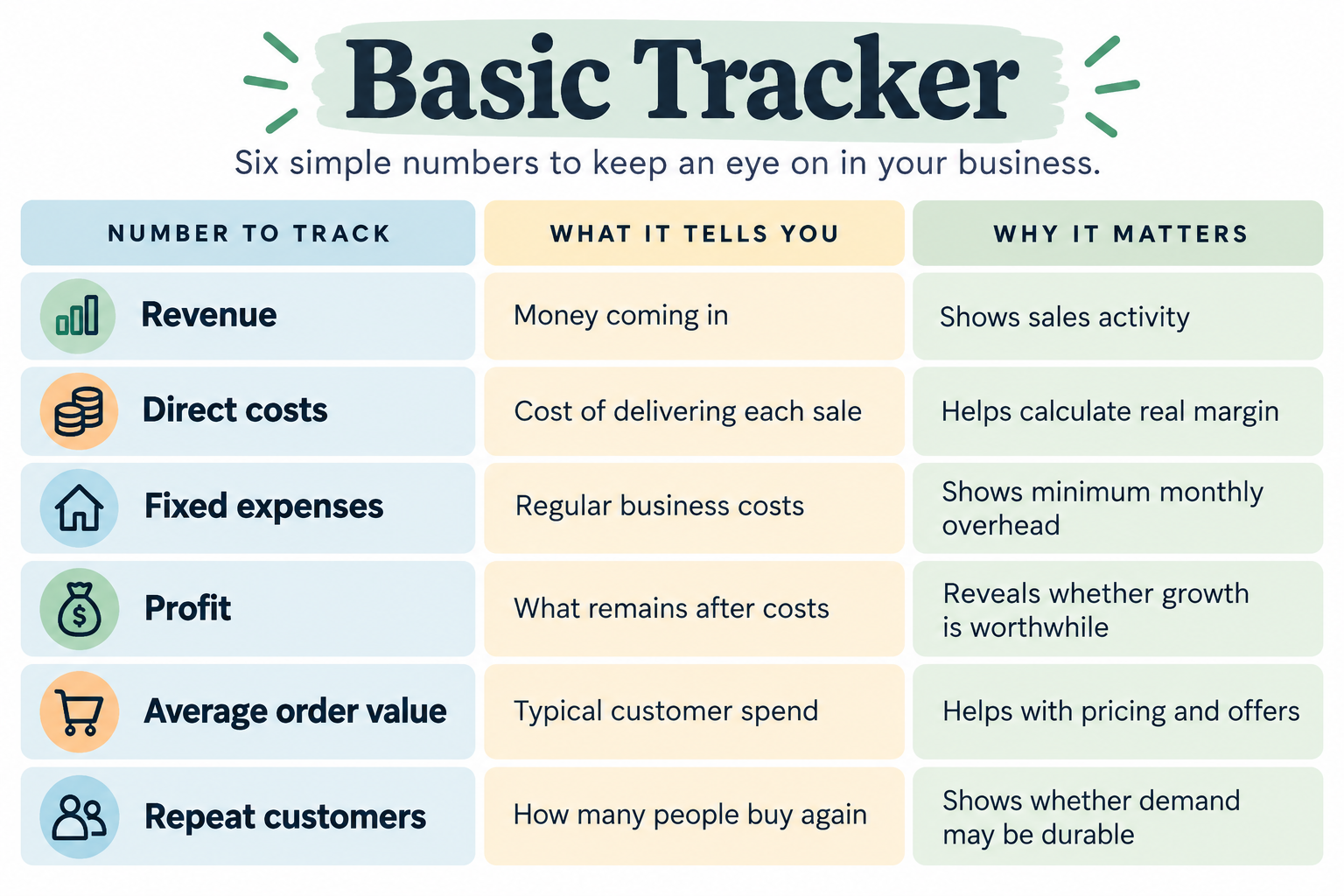
$2,000 sales sounds more impressive than $1,000. However, your revenue doesn’t reveal much to you. Suppose you have sold your product for $40. The materials cost $14, the packaging costs $4, the payment transaction costs $2, and one hour of work goes into producing and shipping each item. It looks like the sales have become quite different now.
Calculate:
revenue
costs
software subscriptions
transaction fees
advertising
shipping
returns
tax reserves you might have to make
time needed to deliver your services
Business and education expert Daniel Walker advises you to disconnect the thrill of “getting paid” from the economic sustainability of your project. When each additional sale generates more effort than profit, growth becomes detrimental to the business.
Work Out Your Break-Even Point
You do not need an advanced finance degree to understand whether the numbers are moving in the right direction.
Separate your costs into two groups. Fixed costs stay relatively similar whether you make one sale or twenty, such as software or website hosting. Variable costs rise when you sell more, such as packaging, payment-processing fees, or materials.
Then ask how many sales you need before revenue covers those costs. The SBA specifically recommends break-even analysis because it can help business owners evaluate pricing, profitability, and missing expenses before expanding.
A basic monthly tracker might look like this:
Pricing for a Business, Not a Student’s Hobbies
The early side hustles usually have too low prices because the primary focus was on having the first client rather than earning. This is understandable. And it is not easy. If you charge $50 for a six-hour job, increased demand will just make your life busy with low-paid work. In the end, either you increase the price or exhaust yourself.
Consider three aspects while setting the price:
Costs: What does it really cost to perform the service?
Time: How many hours of work does it require?
Value: How much is it worth to solve the problem for the client?
It can be helpful to know what the competitors charge, but you should never just copy their prices. Their costs, experience, target audience, and business model may be entirely different from yours. Increase the prices gradually over time.
Change Doing the Same Thing Over and Over into a Process
The first couple of clients could have an entirely unique experience, as you make up everything from scratch. This is okay initially. What will become a problem is needing to recall everything that you had done previously for each new job.
Document your process. How do customers reach out to you? What information do you gather? When do they pay? How do you deliver? How does it end? Develop templates that will save them time:
inquiry responses
quotes/proposals
onboarding questions
invoices
project checklist
follow-up communications
Don’t automate the part where individualized attention counts. Automate the part that is repetitive and doesn’t provide any added value. Your business becomes scalable when success does not hinge upon your ability to remember 25 little things every single time.
Create Something That Can Sustain Itself During a Busy Month
A side project turns into a sustainable business when it ceases to rely on ideal conditions. Customers know about your product. Costs include the true cost of provision. Finances show whether the business makes a profit. Regular operations follow some procedures. There is demand outside your immediate circle of friends.
Most importantly, the business can function properly even when you have a busy week, take a vacation, or focus on other things. You don’t have to turn a side project into a company all of a sudden. First, prove that there is a customer demand for your product. Next, fix the issues with pricing, finances, and processes gradually.
It is not as exciting as declaring the start of a startup after the first sale. But it is a lot closer to making an idea sustainable in the long run.