
How Solo Entrepreneurs Are Using AI Image Tools to Build Professional Branding on a Startup Budget

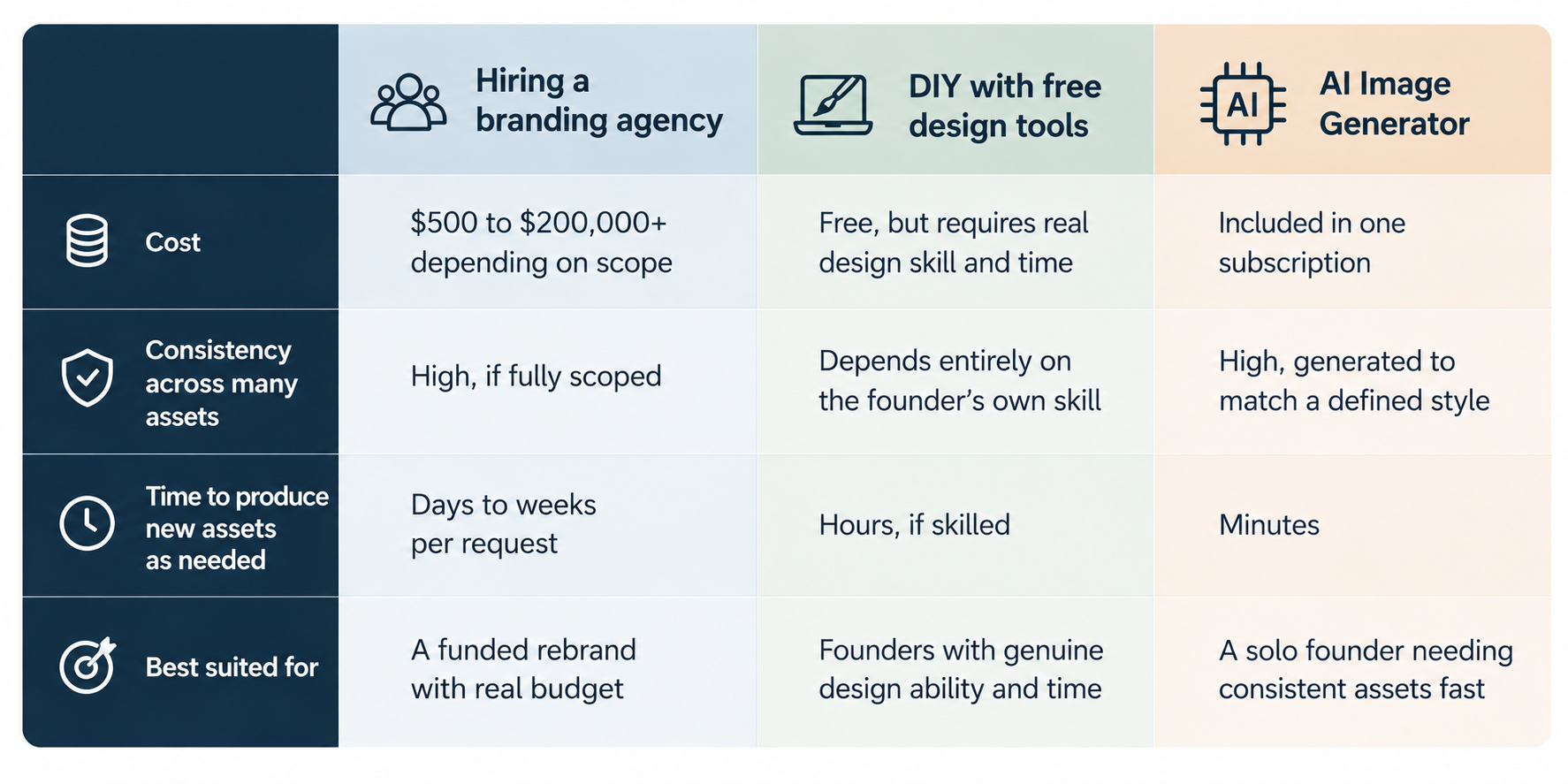
Startup branding in 2026 can run anywhere from around five hundred dollars for a simple marketplace logo to well over two hundred thousand for a full enterprise rebrand, and neither end of that range reflects what most solo founders are actually working with. An AI Image Generator exceptionally integrated within Higgsfield is giving bootstrapped entrepreneurs a genuinely useful middle path, professional-looking brand imagery without the agency price tag or the time most solo founders simply don't have.
Why Does Professional Branding Feel So Out of Reach for a Bootstrapped Founder?
A founder building a business alone is already handling product, sales, customer service, and admin work, and visual branding tends to land at the bottom of that list precisely because it feels like it requires a skill set most entrepreneurs never trained for. The gap between "I need this to look professional" and "I have neither the budget for an agency nor the design background to do it myself" is exactly where a lot of founders either stall out or settle for something that undersells the business they've actually built.
This gap shows up constantly in the kind of member stories a community like this one is built around, someone who's clearly capable of running a genuinely good business still hesitating to put themselves forward publicly because the visual presentation doesn't yet feel like it matches the quality of the work. That hesitation is understandable, but it's also often solvable with far less time and money than founders initially assume once the right approach is in place.
What Actually Makes a Brand Look "Professional" in the First Place?
The honest answer has less to do with expensive photography than most founders assume. Premium perception comes more from consistency, lighting, framing, whitespace, and typography than from a costly shoot, and a repeatable, deliberate visual approach reads as considered and intentional in a way a one-off polished photo never quite achieves on its own. Many bootstrapped brands actually grow faster by looking controlled and intentional rather than glossy and overproduced, which is genuinely good news for anyone working without a studio budget.
What Are the Highest-Visibility Brand Assets Worth Prioritizing First?
Rather than trying to build an entire brand identity at once, the highest-return starting point is a short list of the assets prospective clients and customers actually see first, a website hero image, a founder headshot, a LinkedIn banner, and a handful of reusable social templates. Getting these few pieces genuinely consistent in colour, tone, and style does more for perceived professionalism than a large, inconsistent library of assorted images ever could, and it's also a far more manageable starting project for a founder juggling everything else a growing business demands.
Why Doesn't a Founder's Personal Brand Need to Look Identical to the Company Brand?
For most early-stage businesses, especially solo ones, a founder's personal brand carries real trust before the company's own reputation has had time to build one. That doesn't mean the two need to look identical, matching them exactly can actually undersell the founder's individual credibility, but keeping them visually related through shared colours, image style, and tone reinforces the connection between the person and the business without forcing a rigid, corporate uniformity neither one really needs at this stage of growth.
Where Does DIY Branding Fall Short Even When Following Good Advice?
Even with the right principles in hand, consistent colours, a repeatable photo setup, a limited visual system, actually producing that consistency takes real time and at least some baseline visual skill. A founder can understand exactly what "professional and cohesive" looks like and still struggle to produce it themselves photo by photo, especially once new assets are needed regularly rather than just once during initial setup.
This is genuinely different from lacking good taste or good judgment, most founders can immediately recognise inconsistent branding when they see it, in their own materials or anyone else's. The gap is execution, translating a clear mental picture of the right look into an actual, growing library of images that all genuinely match, a skill that takes real practice even for someone with a naturally strong eye for design.
What Happens When You Need Brand Assets for a Dozen Different Uses at Once?
A single business quickly needs far more visual variety than founders expect going in, a square image for Instagram, a wide banner for LinkedIn, a vertical crop for Stories, a pitch deck cover, a website hero, all ideally sharing the same cohesive visual identity. Producing each of these separately, especially without a design background, turns what should be a quick task into a recurring source of friction every time a new platform or use case comes up.
How Does an AI Image Generator Fit Into This Process Differently?
Higgsfield gives a solo founder access to more than 15 leading image models, including Nano Banana Pro, GPT Image, Seedream, and FLUX, from a single workspace, with native output at resolutions high enough to use directly across a website, social profiles, and printed materials. A founder can describe the exact visual style they want, colours, mood, setting, and generate a consistent set of assets covering a headshot-style image, a banner, and social templates without hiring a photographer or a designer for each individual piece.
This matters most for the founder who genuinely understands what good branding looks like but has never had the time or budget to actually produce it consistently. Being able to describe a visual direction once and generate a matching set of assets, rather than commissioning each piece separately from different sources at different times, is what actually closes the gap between knowing the right principles and having a brand that visibly reflects them.
How Do You Keep AI-Generated Branding Feeling Consistent, Not Random?
This is worth being specific about, since inconsistency is exactly the trap that undermines a DIY approach in the first place. Setting exact brand colours using hex or RGB codes within the same workspace, and reusing the same style description across every generation, keeps a growing library of assets tied to one coherent identity rather than each new image looking like it came from a completely different source. The founders who get the most out of this approach treat the tool the same way they'd treat a hired designer, giving it a clear, consistent brief every time rather than generating each asset in isolation.
What Can a Solo Entrepreneur Actually Produce Beyond a Single Brand Image?
Beyond one hero image, the same visual identity can extend into a founder headshot-style portrait, a LinkedIn banner, and a set of reusable social templates, all sharing the same colours and visual language. This is exactly the kind of cohesive, professional presence the entrepreneurs building creative businesses inside this community already understand the value of, consistency across every visible touchpoint being what actually reads as considered rather than thrown together. This is worth stating plainly, since Higgsfield is sometimes assumed to be a single-purpose photo tool. Higgsfield AI is a native AI creative suite, which offers advanced AI image, video, and voice generation, editing, and upscaling tools, meaning a founder building out their brand can also produce short video content from the same workspace as their business grows.
Does This Replace the Strategic Thinking Behind Genuinely Good Branding?
No, and this matters as much here as anywhere. What actually makes a brand work isn't the polish of any single image, it's the clarity of who the business is for and what it stands for, the kind of strategic thinking no image generator can do on a founder's behalf. An AI Image Generator speeds up producing consistent, professional-looking visuals around a brand direction that's already been decided. It does not decide who your ideal client is, what makes your business different, or which visual direction actually reflects that positioning. That thinking stays entirely the founder's own, and it's worth doing before generating a single image rather than trying to reverse-engineer a strategy from whatever happens to look good.
This is where a lot of solo founders actually go wrong with any branding tool, AI-assisted or otherwise, jumping straight to visuals before they've genuinely answered who the brand is for. A beautifully consistent set of images built around an unclear positioning still won't resonate the way a rougher but strategically clear brand will, which is exactly why the thinking has to come first regardless of how quickly the visuals themselves can now be produced.
What Should a Solo Entrepreneur Look for in an AI Image Generator for Branding?
A few things matter more here than for general content creation. The ability to set and reuse exact brand colours matters most, since consistency is what actually separates professional branding from a random assortment of nice-looking images. A short learning curve matters given how little spare time most solo founders genuinely have. And affordability matters practically, since branding shouldn't compete with the operating budget a bootstrapped business actually needs to survive its early stages.
It's also worth checking how easily a platform like Higgsfield lets you revisit and regenerate an asset once your brand direction naturally evolves, since a founder's visual identity in year one rarely stays completely static as the business grows and finds its actual audience. Being able to adjust the established style slightly rather than starting the entire branding process over again keeps the whole system genuinely sustainable rather than a one-time project that quietly goes stale.
What Are the Key Takeaways for Building Branding on a Startup Budget?
Professional branding comes more from consistency and intentional presentation than from expensive photography, genuinely good news for a bootstrapped founder.
A short list of high-visibility assets, a hero image, a headshot, a banner, a few social templates, matters more than a large, inconsistent library.
An AI Image Generator like Higgsfield lets a solo founder produce a consistent set of brand assets without hiring a designer or photographer for every individual piece.
The strategic thinking behind good branding, who the business is for and what it stands for, stays entirely the founder's own, regardless of how the visuals get produced.
What Are Some Frequently Asked Questions About AI Branding Tools for Solo Entrepreneurs?
Can an AI Image Generator create a complete brand identity on its own?
It can produce the visual assets, images, banners, social templates, in a consistent style, but the actual brand strategy, who you're for and what makes you different, still needs to come from the founder before generating anything.
Do I need design experience to use an AI Image Generator for my branding?
No. Describing the colours, mood, and style you want in plain language is enough to get usable results from ai tools, though having a clear sense of your intended visual direction beforehand makes the results far more consistent.
Should my personal brand and my business brand look exactly the same?
Not necessarily. Keeping them visually related through shared colours and tone works better for most solo founders than forcing an identical look, since your personal credibility and your company's brand can reinforce each other without needing to be indistinguishable, especially in the early stages when clients are often trusting you personally before they fully trust the business itself.
Is this only useful for very early-stage founders, or does it help as a business grows?
It helps at both stages, though it's especially valuable early on when budget is tightest and the need for a wide range of consistent assets, social, web, pitch materials, is often highest relative to what a founder can justify spending. As a business grows and eventually has room for a dedicated designer or photographer, the tool doesn't stop being useful, it just shifts toward handling ongoing, high-volume needs alongside whatever more bespoke work a bigger budget can now support.