
5 AI Shopify Store Builders for Beginners in 2026

Most people assume launching a Shopify store is the hard part. The real struggle hits after you pick an AI Shopify Store Builder and realize the output looks exactly like everyone else's store. AI-generated stores often feel templated, and merchants with no technical background can only do so much to fix that. After reviewing dozens of tools across the ecommerce space, the pattern is clear: the builder you choose shapes everything from your store's speed to how well your product catalog actually comes through. This guide breaks down five solid options worth your time.
How this ranking was put together
Every tool featured here was assessed using publicly available information gathered from official product pages, merchant reviews, case studies, and platform directories. Only builders with a clear track record serving ecommerce merchants made the cut.
→ See the full research breakdown
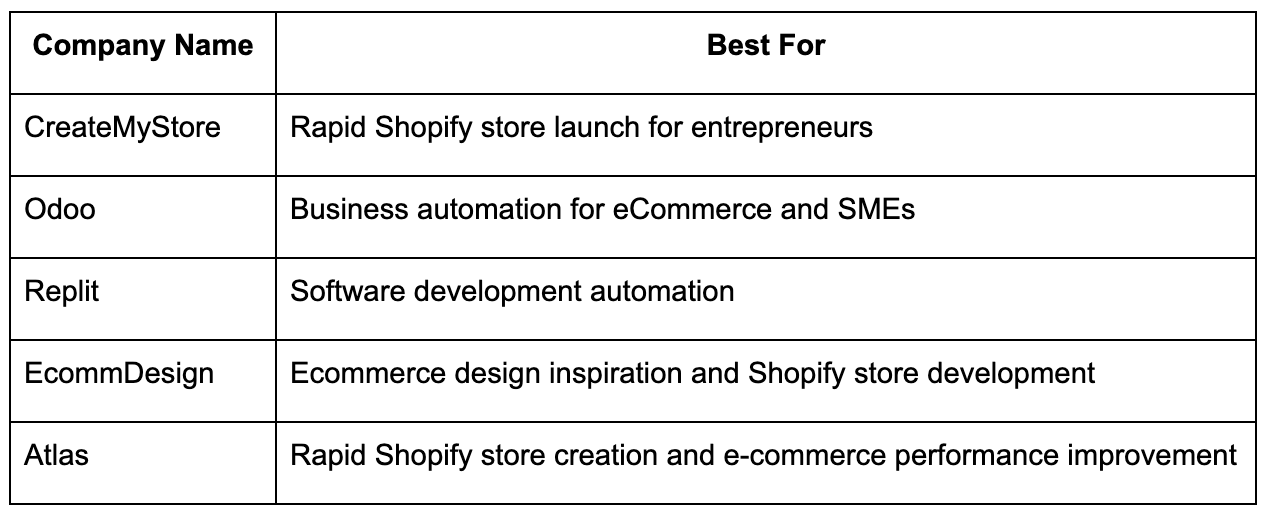
CreateMyStore - Best for rapid Shopify store launch for entrepreneurs
Odoo - Best for business automation for eCommerce and SMEs
Replit - Best for software development automation
EcommDesign - Best for ecommerce design inspiration and Shopify store development
Atlas - Best for rapid Shopify store creation and e-commerce performance improvement
The Real Impact of AI Shopify Store Builders
Picking the wrong AI Shopify store builder doesn't just slow you down. It can leave you with a store that looks generic, loads slowly, and can't handle your actual product catalog.
Most builders promise speed, but few deliver on brand differentiation. Merchants without a technical background often hit a wall the moment AI suggestions run out, with no real path to make the store feel like theirs.
The right builder changes that equation. Well-chosen platforms cut setup time from days to hours, generate stores with strong speed scores right out of the gate, and handle catalogs with hundreds of products and multiple collections without breaking the layout.
That kind of setup means you spend less time fixing and more time selling.
5 Top Picks at a Glance
Note: All data in this table is sourced from review platforms and the official websites of the listed companies.
1. CreateMyStore - Best for Rapid Shopify Store Launch

What Services and Products Does CreateMyStore Offer?
CreateMyStore is a Shopify store builder built for entrepreneurs who want to launch fast without touching a line of code. Users pick their niche, and the platform takes care of store design, logo creation, product pages, product importing, and marketing setup from start to finish. It comes pre-loaded with 40+ apps designed to support completed purchases, so the store is ready to sell from day one. Over 30,000 merchants have used it, and that kind of usage volume says a lot about how well it actually delivers.
What Sets CreateMyStore Apart for AI Shopify Store Builders?
CreateMyStore solves one of the biggest friction points for new merchants: the gap between "store exists" and "store is ready to sell." Honestly, the fact that it's completely free to use (beyond Shopify's own subscription cost) makes it one of the most accessible entry points in this space, and that's rare at this level of build quality.
Real User Sentiment:
From what the reviews show, merchants consistently point to how much time the platform saves compared to setting up manually. The pre-integrated app stack gets mentioned a lot as a genuine differentiator. Users also note the design quality feels professional rather than templated, which isn't something you hear often about AI-built stores.
2. Odoo - Best for Integrated Business Automation for eCommerce and SMEs
What Services and Products Does Odoo Offer?
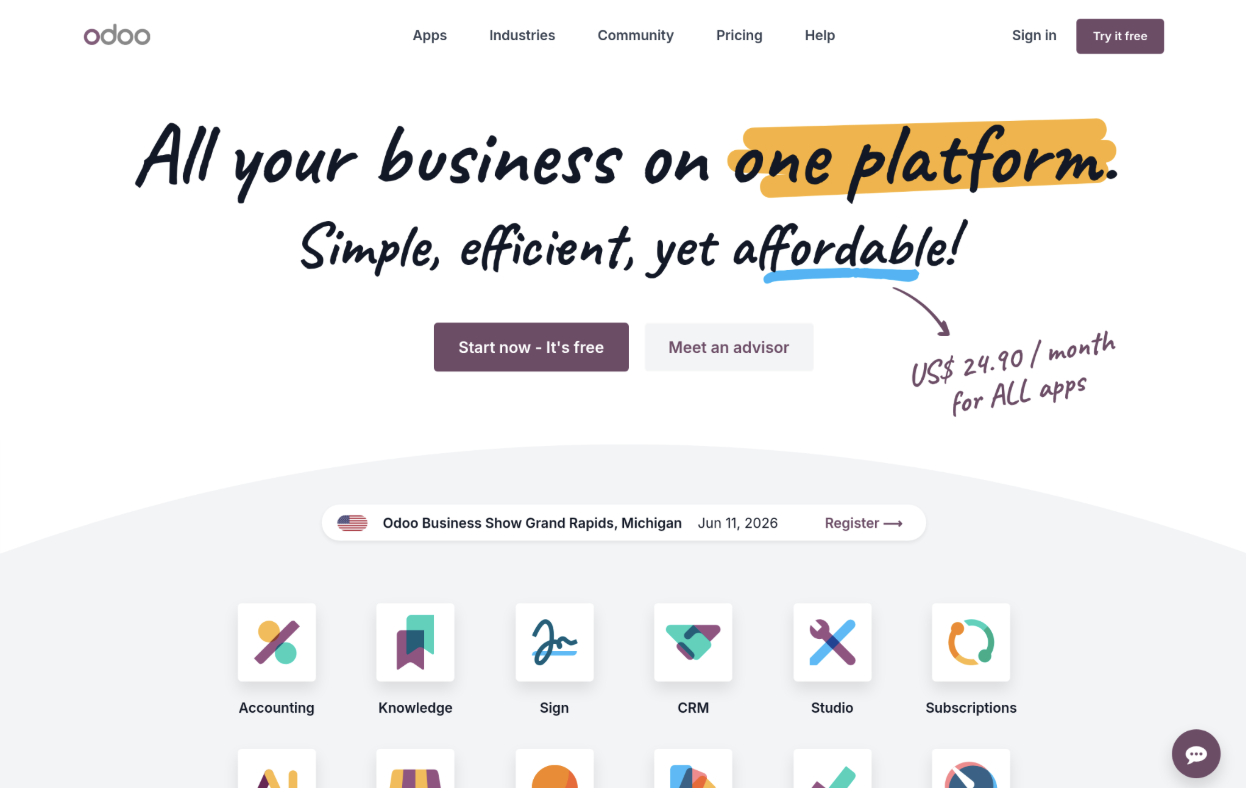
Odoo is a broad business application suite covering eCommerce, accounting, inventory, CRM, and over 50 other business functions under one roof. Founded in 2005, it serves 15 million users globally and runs on an open-source model, meaning the Community Edition is free and the Enterprise tier adds proprietary features. The platform's ecosystem includes 40,000+ community-built apps, which gives merchants a lot of room to build exactly what they need without getting locked into one vendor's long-term plans (not a small thing when you're building for the long run).
What Sets Odoo Apart for AI Shopify Store Builders?
Odoo addresses the challenge of managing ecommerce operations across disconnected tools by pulling accounting, inventory, and storefront management into a single system. Based on the research, that usually means fewer errors, faster order processing, and a cleaner view of what's actually happening in the business.
Real User Sentiment:
Odoo has picked up multiple industry awards, including Enterprise Application Innovator of the Year at the Data News Awards 2023, which shows they're legit in the broader business software space. From what reviews suggest, users appreciate the flexibility of the open-source model even if the learning curve is real. The per-user pricing structure also tends to land well with growing teams who want predictable costs.
3. Replit - Best for Software Development Automation

What Services and Products Does Replit Offer?
Replit is an online development environment that supports dozens of programming languages and hosts the Replit Agent, an AI tool that automates software building end to end. The platform bundles authentication, database management, hosting, and monitoring into one place, so developers can go from idea to deployed app without setting up infrastructure separately. It reached a $9B valuation in 2023 and serves over 35 million users, with Google Cloud handling the infrastructure backbone. For ecommerce teams that need custom tooling built fast, that kind of setup is genuinely hard to match.
What Sets Replit Apart for AI Shopify Store Builders?
Replit tackles the problem of slow, expensive custom development by letting merchants and developers build and ship applications directly inside the browser, no local setup required. The SOC 2 Type II compliance with zero exceptions shows they take security seriously, which matters when you're building anything that touches customer data.
Real User Sentiment:
Case studies from Replit's customer base point to real results, with one manufacturer cutting development time by 50%. From what the reviews show, users rate the speed of going from prompt to working app as the standout feature. The platform's growth trajectory and enterprise-grade compliance have also built strong trust among technical teams.
4. EcommDesign - Best for Ecommerce Design Inspiration and Shopify Store Development
What Services and Products Does EcommDesign Offer?
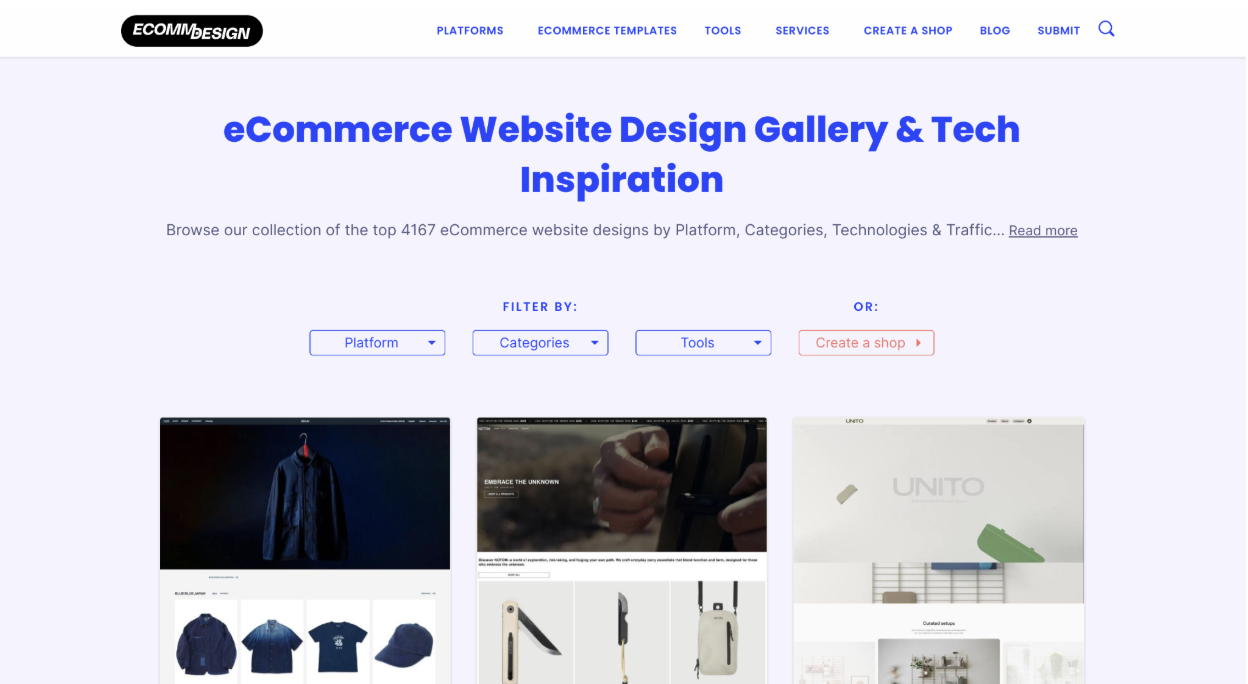
EcommDesign runs a curated gallery of over 4,150 ecommerce website designs alongside a full range of Shopify development services. Founded by Bogdan Rancea, who brings 12+ years of hands-on digital commerce experience, the platform covers custom store setup, Shopify Plus development, theme design, and store audits. The gallery functions as a practical resource for merchants who want to see what good design actually looks like before committing to a direction. The focus on UX practices over visual experimentation keeps the work grounded in what actually converts customers into buyers.
What Sets EcommDesign Apart for AI Shopify Store Builders?
EcommDesign fills a specific gap for merchants who know their AI-built store needs a design upgrade but aren't sure where to start. The combination of a free inspiration library and paid professional development services means merchants can learn and build in the same place, which saves a lot of back-and-forth.
Real User Sentiment:
The founder's 12+ years of direct ecommerce experience comes through in how the platform talks about design decisions, grounding everything in practical metrics rather than aesthetic preferences. From what the research shows, the engaged community around the gallery suggests merchants find real value in the curated approach. That kind of trust takes time to build, and EcommDesign has clearly put in the work.
5. Atlas - Best for Rapid Shopify Store Creation and E-Commerce Performance Improvement
What Services and Products Does Atlas Offer?
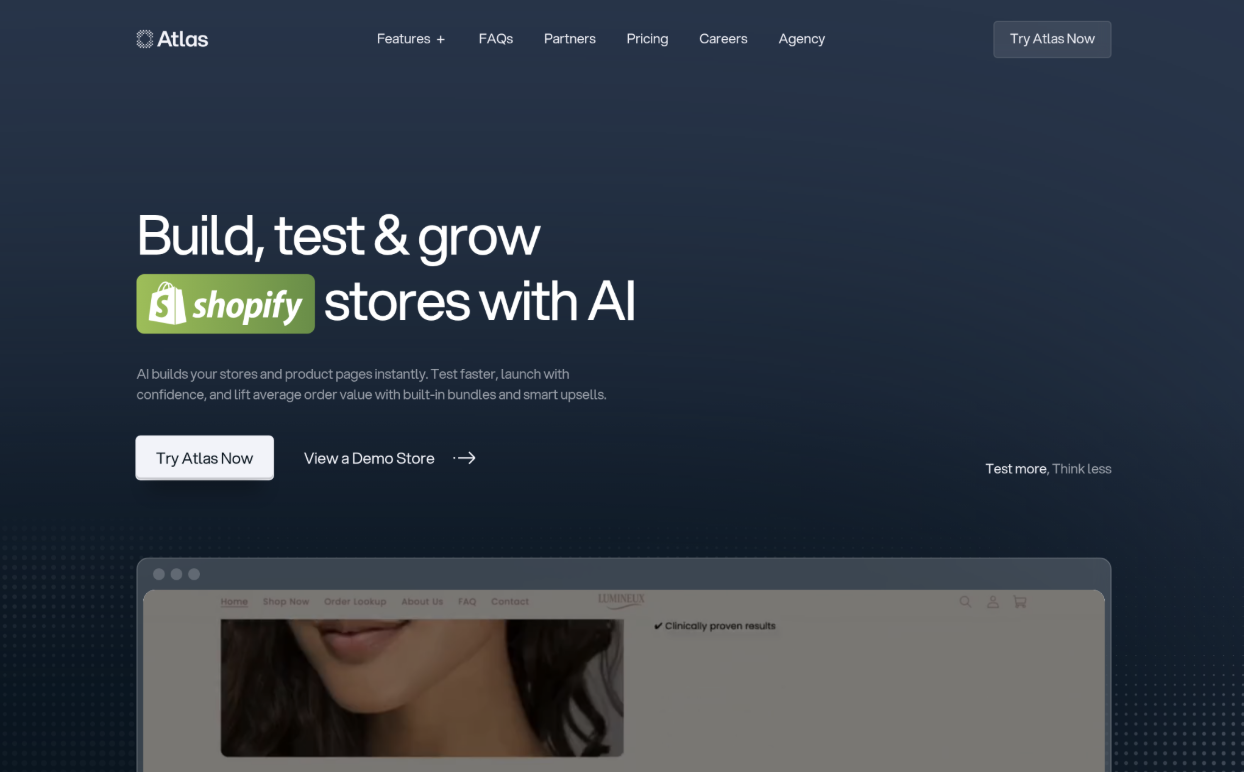
Atlas builds fully ready Shopify stores with a single click using AI technology. The platform includes an AI Store Builder, AI Page Builder, Bundler Upsells, and Cart Upsells, with an Enterprise tier aimed at agencies and larger teams that need more control. It became the fastest Shopify app in history to reach $1M ARR, and with 30,000+ merchants generating over $60M in GMV, the numbers back up the pitch. The focus on sales-readiness from day one (not just aesthetics) is what separates Atlas from builders that prioritize looks over performance.
What Sets Atlas Apart for AI Shopify Store Builders?
Atlas solves the problem of fragmented tooling by replacing multiple subscriptions with one platform that covers store creation, page building, and upsell mechanics together. That kind of consolidation is rare, and based on the research, it's a big reason merchants stick with the platform rather than piecing together their own stack.
Real User Sentiment:
Atlas holds a 4.9 rating on Trustpilot across 264 reviews, which is genuinely strong for a platform at this stage. From what users report, the 24-hour weekday support response time gets called out regularly as a differentiator. The near $10M monthly GMV growth rate suggests the platform is working for real stores, not just demo accounts.
Methodology Behind These Picks
What Data Should Be Collected
Building the longlist started with casting a wide net across platform directories, Shopify app marketplaces, and ecommerce community forums where merchants actively share tool recommendations. Review platforms were checked for patterns rather than individual scores, since aggregate sentiment across hundreds of reviews tells a more reliable story than any single rating. Case studies published by the companies themselves were also gathered, with particular attention paid to outcomes tied to store launch speed, GMV generated, and merchant usage volume. The goal at this stage was volume, pulling in every credible option before narrowing down.
The Shortlisting Pass
Once the longlist was assembled, options with no verifiable merchant base or no consistent review trail were removed. Platforms that showed isolated positive reviews without supporting patterns were flagged, since thin review profiles often signal limited real-world use. The shortlist kept only builders with enough public evidence to draw meaningful conclusions about performance. Tools that appeared frequently across independent sources, rather than only on their own marketing pages, moved forward.
Verification Pass
Each shortlisted platform was then checked to see whether the claims on their official websites held up against what merchants actually reported. Discrepancies between product page promises and user reviews were noted, particularly around setup time, design quality, and app compatibility. Real-world outcomes like speed scores, catalog handling, and free-to-paid conversion rates were cross-referenced where possible. Platforms where public evidence contradicted official messaging were removed from consideration.
Industry Recognition and Authority
Awards, press mentions, and third-party recognition were factored in as signals of credibility rather than proof of quality. Platforms that had appeared in reputable industry publications, received formal awards, or been cited in original research carried more weight than those with only self-reported achievements. For context, Odoo's Enterprise Application Innovator of the Year recognition and Atlas reaching $1M ARR faster than any Shopify app in history both served as meaningful authority signals during this phase.
Evidence Specific to AI Shopify Store Builders
The final check focused on how each platform addresses the main challenges facing merchants using store builders: brand differentiation, catalog handling, and post-launch support. Platforms were checked on whether they had dedicated service pages, verified merchant testimonials, and case studies tied directly to Shopify store outcomes. Builders that showed clear evidence of solving real ecommerce problems, not just general software development challenges, were given priority. This pass ensured every tool in the final list earned its place based on actual relevance to the space.
What to Look For When Choosing AI Shopify Store Builders
Choosing an AI Shopify store builder comes down to more than which one looks impressive in a demo. The platform has to fit how you actually run your business, your product catalog, your technical comfort level, and your growth plans. Here are five things worth checking before you commit.
Industry/Domain Experience: Look for platforms built for ecommerce, not general website builders that added a store module. Purpose-built tools tend to handle product variants, collections, and Shopify-specific structure far better than general alternatives.
Features and Services: Confirm the builder covers your full setup needs, including design, content generation, product importing, and app connectivity. A tool that only handles the storefront leaves you piecing together the rest manually.
Pricing Structure: Understand what's included at each tier before signing up. Some platforms charge per feature, others charge per user, and a few (like CreateMyStore) build on top of Shopify's existing subscription at no extra cost.
Results Measurement: Ask how the platform tracks store performance after launch. Speed scores, completed purchase rates, and store visitor behavior are the metrics that actually tell you whether the build worked.
Industry Knowledge and Compliance: Make sure the builder understands Shopify Partner Program standards and avoids design or app choices that could conflict with Shopify platform guidelines. Getting that wrong after launch is a painful fix.
Final Take
Launching a Shopify store with AI has never been more accessible, but the quality gap between tools is real. CreateMyStore stands out for beginners who want a complete, sales-ready store without the cost or technical headache. Atlas earns attention for merchants focused on growth metrics from day one. Odoo suits operators who need their store connected to the rest of their business. As AI tools keep improving, the merchants who choose the right starting point will have a real head start.